November 7th, 2011 by Michael Craig Miller, M.D. in Research
No Comments »

If your child is being treated for attention deficit hyperactivity disorder (ADHD), you may have one less thing to worry about today. A study involving 1.2 million children and young adults provided reassuring evidence that the drugs used to treat ADHD do not increase the risk of death from heart disease.
Researchers, who published their results yesterday in the New England Journal of Medicine, analyzed medical records from a nationwide private insurance plan along with health plans based in Tennessee, California, and Washington State. They compared children taking stimulant drugs (like Ritalin and Adderall) that are commonly used to treat ADHD to children not taking these drugs.
Among all of the children, heart attack, stroke, or sudden death were rare, affecting a little more than 3 in every 100,000 children per year. Cardiac problems were no more common among children using a stimulant as among those not taking one.
The study Read more »
*This blog post was originally published at Harvard Health Blog*
November 6th, 2011 by ChristopherChangMD in Health Tips
1 Comment »

 Though most people like the professional nose whistler shown here require an instrument to enable the nose to whistle, in others it occurs naturally due to unique anatomic features within the nose.
Why might someone’s nose whistle?
Septal Perforation
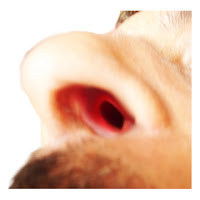 The most common reason it may occur constantly is due to a hole in the septum (septal perforation). The septum is a wall that divides the right nasal cavity from the left side. Normally, it should be straight and without any openings.
However, when a hole is present in the septum and it is in just the right size and place, whenever air is breathed in and out of the nose, it will whistle. In this situation, the hole is the “window” of the whistle and the nose itself is the mouthpiece.
Correction of this problem is by Read more »
*This blog post was originally published at Fauquier ENT Blog*
November 6th, 2011 by Bryan Vartabedian, M.D. in Opinion
No Comments »

I saw it begin to happen in the ’90′s. Residents came to rounds with their daily notes produced on a word processor. The notes were impressive. Legible, lengthy and meticulously detailed at first glance.
Then I started to notice a pattern. The impressive notes began to look very much alike. The thorough exam varied little from patient to patient. And problems that occurred on previous days seemed to persist in the medical record, even when it had resolved. In some cases the previous day’s note was printed only to have one or two additional elements added by hand. It was never really clear what was worse: the lack of effort or the illegible writing.
Our electronic health records (EHR) offer similar options. We can smart text our way to clinical efficiency. Some doctors have entire impressions and elements of the history pre-generated for common conditions. These are advertised features of the most common EHRs. Technology can make us look Read more »
*This blog post was originally published at 33 Charts*
November 6th, 2011 by Toni Brayer, M.D. in Health Tips
No Comments »


Immediately Post-op Carpal Tunnel release
Carpal Tunnel Syndrome (CTS) is common and is the result of the median nerve becoming squeezed or “entrapped” as it passes through the wrist down into the palm of the hand. Because this is a sensory nerve, the compression causes tingling, burning and itching numbness in the palm of the hand and fingers. A different nerve goes to the little finger and the lateral half of the 4th finger so the sensation there would feel normal. There is often a sensation of swelling even though there is rarely any true edema that can be seen in CTS.
The symptoms of Carpal Tunnel Syndrome usually start at night when people sleep with flexed wrists. As it progresses, the tingling and numbness can be felt on and off during the day. It can cause decreased grip strength and weakness in the hands.
CTS can be worsened by medical conditions like rheumatoid arthritis, diabetes, pregnancy or wrist trauma. Women are three times more likely to develop CTS than men, and it is rare in children. Most of the time no cause is found. The space that the median nerve traverses is very tiny and it doesn’t take much to compress the nerve. Even small amounts of tissue swelling such as occurs in pregnancy can cause severe symptoms.
The treatment for Carpal Tunnel Syndrome starts with Read more »
*This blog post was originally published at EverythingHealth*
November 6th, 2011 by DrWes in Health Policy, Opinion
No Comments »

Like Christmas season advertising, the holiday crunch for procedural medicine is coming earlier every year.
Perhaps that’s why the posting on this blog as suffered: we’re busier than ever.
Why is this?
I suspect it’s because of a variety of forces that are coming together to create the great procedural “perfect storm” this time of year.
Perhaps the most important contributor to the holiday rush is the patients themselves. Patients are Read more »
*This blog post was originally published at Dr. Wes*