January 4th, 2011 by AndrewSchorr in Better Health Network, Health Tips, Opinion, Research
No Comments »

You are an individual right? To your mom and dad you are/were like no other. Hopefully your family and friends continue to see you as one-of-a-kind. Had you considered your doctor should see you that way too? Not as yet another one with diabetes, or heart disease, or cancer, but as a singular human being with biology that may be different from even the next person through the door with the same diagnosis.
This is the age of “personalized medicine” and it will accelerate in 2011. It is our responsibility as patients to ensure the power of this concept is leveraged for us each time we interact with the healthcare system. This is especially true as we manage a serious chronic condition or a cancer.
Now, in research and in clinical practice there are refined tests to determine what our specific version of a disease is and there are tests to see how a targeted therapy is working in our bodies. In other words, there’s the opportunity to see which therapy might be right for us that might be different than what is right for another person, and then there is the opportunity to monitor the therapy early on to see if it is doing its job. Read more »
*This blog post was originally published at Andrew's Blog*
December 31st, 2010 by DavedeBronkart in Better Health Network, Health Tips, Research
2 Comments »

This is the first of the follow-up posts I hope to write from participating in the Salzburg Global Seminar titled “The Greatest Untapped Resource in Healthcare? Informing and Involving Patients in Decisions about Their Medical Care.”
One of our purposes on this site is to help people develop e-patient skills, so they can be more effectively engaged in their care. One aspect is shared decision making, which we wrote about in September. A related topic, from August, is understanding the challenges of pathology and diagnosis. Both posts teach about being better informed partners for our healthcare professionals.
I’ve recently learned of an another topic, which I’m sure many of you know: Practice variation. This is a big subject, and I’ll have several posts about it. It’s complex, the evidence about it is overwhelming, and its cost is truly enormous. Read more »
*This blog post was originally published at e-Patients.net*
December 29th, 2010 by eDocAmerica in Better Health Network, Opinion
No Comments »

Recently, I was involved in a discussion on an email list serve and decided to takes some of my comments on patient autonomy and blog about them. This arose following a debate about whether the term “patient” engendered a sense of passivity and, therefore, whether the term should be dropped in favor of something else, like “client” or something similar.
Having participated in the preparation and dissemination of the white paper on e-patients, I don’t see the need for “factions” or disagreements in the service of advancing Participatory Medicine. As Alan Greene aptly stated: “This is a big tent, with room for all.”
I want all of my patients to be as autonomous as possible. In my view, their autonomy is independent of the doctor-patient relationship that I have with them. They make the choice to enter into, or to activate or deactivate, the relationship with me. They may ignore my input, seek a second opinion, or fire me and seek the care of another physician at any time. They truly are in control in that sense. The only thing I have control over and am responsible for is trying to provide the best advice or consultation I can. Read more »
*This blog post was originally published at eDocAmerica*
December 29th, 2010 by GarySchwitzer in Better Health Network, Health Tips, News, Opinion, Research
No Comments »

Dr. Kent Bottles is in the midst of a very thoughtful multi-part blog post under the heading, “The Difficult Science Behind Becoming a Savvy Healthcare Consumer.”
Part I examined “the limitations of science in helping us make wise choices and decisions about our health.”
Part II explores “how we all have to change if we are to live wisely in a time of rapid transformation of the American healthcare system that everyone agrees needs to decrease per-capita cost and increase quality.”
Both parts so far have addressed important issues about news media coverage of healthcare. Read more »
*This blog post was originally published at Gary Schwitzer's HealthNewsReview Blog*
December 21st, 2010 by Michael Sevilla, M.D. in News, Opinion
No Comments »

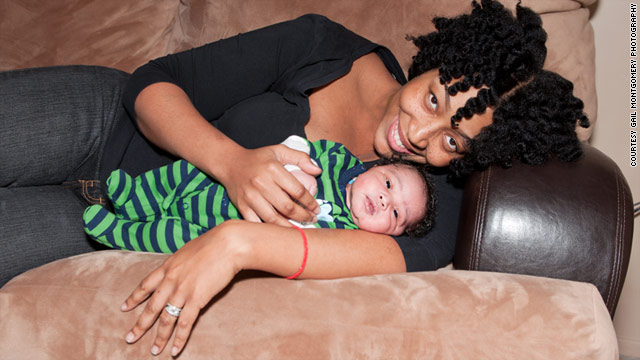 Every once I awhile a story catches my eye as I scan the news websites. There was one this morning on CNN with this catchy title: “Mom Defies Doctor, Has Baby Her Way.” The article describes a story where a mother was going to have her fourth baby. Her previous three were born via C-section. Mom did not want another C-section done, and “defied” her doctor’s order for the procedure. “You’re being irresponsible,” the patient was told.
The middle of the article talks about the current thinking and statement of the American College of Obstetrics and Gynecology saying that “it’s reasonable to consider allowing women who’ve had two C-sections to try to have a vaginal delivery.” Of course, there’s risks with proceeding with a vaginal delivery and risks of another C-section.
What’s always interesting to me are the comments following the article. I applaud the physicians who are fighting back the anti-physician sentiment and those who are pushing (no pun intended) the only home birth agenda.
In the article, this person is being held up as a hero — as someone who defied the paternalistic medical establishment and did it her way. Good for her — or is it? What if that 0.4-0.9 percent possibility of severe complication occurred and there was a problem with mom and/or the baby? What would happen then? Read more »
*This blog post was originally published at Doctor Anonymous*












