November 23rd, 2011 by Berci in Opinion
No Comments »

For the last 4 years, I’ve been teaching medical and public health students about the use of social media and generally digital technologies in medicine and healthcare and I got a good picture of what kind of medical professionals they would become soon. They represent the new generation of physicians.

Here are my points and observations:
- They are technophile. I remember the time when there was no internet, I remember the first website I first saw online. They were born into the technology and internet-based world. For them, websites, Facebook, Twitter and blogs represent the basics. They love gadgets and devices.
- They are fast. They use smartphones, read news online, follow blogs and know what RSS is, they are familiar with multi-tasking. They are much faster than the previous generations, therefore they need different tools and solutions in their work.
- But they use the technology for Read more »
*This blog post was originally published at ScienceRoll*
November 22nd, 2011 by RyanDuBosar in Research
No Comments »

Alarm fatigue is the most dangerous of health care technology hazards, topping even radiation exposure and medication errors from infusion pumps, according to the updated Top 10 list offered by ECRI Institute.
It’s not surprising that alarm fatigue rang in at #1. There can be as many as 40 alarms an hour in some units. Staff modify alarm setting outside of safe parameters, can’t tell the alarm’s importance (or even which device is issuing it) or the alarm isn’t relayed to the paging system, according to ECRI Institute, a nonprofit organization focusing on patient-safety and cost-effectiveness in health care. Its report (registration required) is online. The report includes recommendations and resources for each of the 10 top hazards.
Staff may turn alarms off or down to reduce alarm fatigue, as well as reduce stress on the patient and family, the report notes. And properly setting alarms is complex to begin with, so ECRI offers best practices to reduce alarm fatigue while maintaining patient safety: Read more »
*This blog post was originally published at ACP Hospitalist*
November 22nd, 2011 by DrWes in News, Opinion
No Comments »

From Medgadget via The Medical Quack:

EBR Systems, a start-up out of Sunnyvale California, and Cambridge Consultants, the technology design and development firm, have developed a leadless pacemaker system for patients with advanced heart failure. The Wireless Cardiac Stimulation System (WiCS) comprises two units, an implantable electrode and an external control unit. The electrode incorporates an ultrasonic, wireless receiver and delivers an electrical stimulus to the heart based on triggering signals from the external control unit.
In its current iteration the WiCS system is designed to work with conventional pacemakers/defibrillators pacing the right ventricle of patients requiring biventricular pacing. The WiCS external control unit senses the pacing stimulus delivered to the right ventricle and initiates a burst of stimulus from the electrode implanted in the left ventricle. According to the company, Read more »
*This blog post was originally published at Dr. Wes*
November 21st, 2011 by Shadowfax in Opinion
1 Comment »

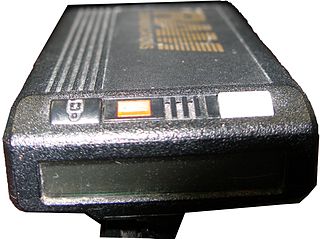
We respond to certain “Code Blue” situations in our hospital. In the ED, of course, and in the outpatient areas and radiology, and if needed as back-up in the inpatient units. The hospital issues one of those overhead calls when there is a code blue — a cardiac arrest or other collapse, person down, injury, etc., but we also carry a pager in the ER in case we don’t hear the overhead call. The pager also signifies which doc is designated to respond to such a call, since we often have 8 docs working at once. It’s a little ritual we have at change of shift, passing off the pager and the spectralink phone, like the passing of the torch to the oncoming doc.
So of course I took the pager home the other day and had to make an extra trip to the hospital to return it. Ugh.
As I was driving back in, I took a moment to really look at the thing, and it struck me that this pager is the exact same model I used in medical school and residency, way back in the mid nineties. The exact same one: Read more »
*This blog post was originally published at Movin' Meat*
November 19th, 2011 by Bryan Vartabedian, M.D. in Opinion, True Stories
No Comments »

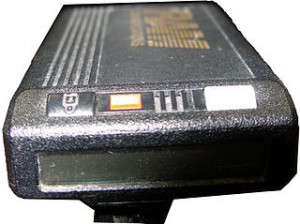 It’s funny what we remember. As a 3rd year medical student rotating in surgery I remember quite clearly sitting in my attending’s office at Worcester Memorial Hospital. He was a vascular surgeon. I don’t remember his name. On this particular day I had followed him to his office after rounds. He had just received his new pager and placed a call to whomever had sent him the device.
It seemed there was a problem. The device lacked the latest pager feature: vibration. His current pager only beeped. The dialog centered around his on-call demands as a vascular surgeon and his love for the symphony. With a buzzing pager he Read more »
*This blog post was originally published at 33 Charts*