March 21st, 2010 by Paul Auerbach, M.D. in Better Health Network, Health Tips, True Stories
Tags: Antivenom, Mouth Suction, Poisonous Snakes, Snake Bite, Venom
No Comments »

Last spring there was a news story about a man who said he saved his dog’s life by sucking venom from a rattlesnake bite out of the animal’s nose. After he performed this lifesaving feat and took his dog to a veterinarian, he reportedly began feeling ill himself.
It is further reported that he went to a hospital and received four vials of antivenom. The dog reportedly had its head swell up to three times its normal size and it also was administered antivenom. The man and his dog recovered. Read more »
This post, Snake Bites: Should You Suck The Venom Out Or Not?, was originally published on
Healthine.com by Paul Auerbach, M.D..
March 21st, 2010 by Toni Brayer, M.D. in Better Health Network, True Stories
Tags: Haiti, HIV infection, HIV/AIDS, Infectious Disease, Patient Privacy, Stigma
No Comments »

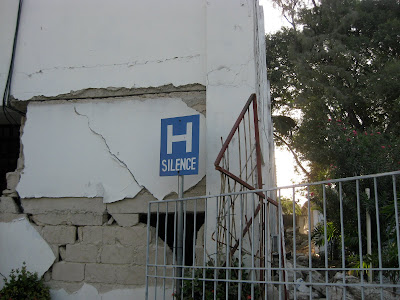
I can’t get the stories of Haiti out of my mind. A patient showed up at the Port au Prince hospital ward with a massive left sided paralysis: an obvious stroke. This 48-year-old woman had collapsed the day before and was now accompanied by her three grown daughters, who were most attentive and worried. I examined her in the bed with other patients and families gathered around. (There is no sense of privacy and even an exam seems to be everyone’s business in Haiti). One daughter spoke broken English, but I had a good translator that helped me get the information I needed. It was a sad story. Read more »
*This blog post was originally published at EverythingHealth*
March 21st, 2010 by Bryan Vartabedian, M.D. in Better Health Network, Opinion
Tags: Health Commentary, Online Health Conversation, Social Health
No Comments »

Meetings centered on social health are becoming popular. Everyone wants a piece of the pie as the demand for face-to-face dialogue grows. But this raises an interesting question: Who owns the social health conversation? In other words, who decides where, when and what to talk about? And who speaks? Who, after all, is in charge?
Online no one owns anything. Everyone has the stage. Your platform and reach are determined by your credibility. But the relationships and power positions that evolve in the virtual world may not extrapolate to the real world. There are different forces in play. Read more »
*This blog post was originally published at 33 Charts*
March 20th, 2010 by DrCharles in Better Health Network, Health Tips, Research
Tags: Cardiology, Coronary Artery Disease, General Medicine, Heart Disease, Non-Homogenized Milk
1 Comment »

 Mmmm. I just discovered non-homogenized milk — the kind with the thick layer of cream on top and more watery milk below. You have to shake it up before each serving, and the little flecks of buttery cream never quite disappear. Non-homogenized milk can look alien at first, with tiny chunks of floating cream fooling the mind into thinking the stuff’s gone rancid. But the taste is far superior to homogenized milk. Think milk with a hint of butter.
This is the old-fashioned kind, available to humans for 10,000 years until the 1930’s when homogenized milk became widespread. Homogenization of milk is accomplished by a series of filtration steps under high pressure that squeeze milk and its relatively large fat globules through tiny tubes, breaking the globules into microscopic pieces which are then prevented from coalescing by the casein already in the milk. This process makes milk look homogenous — uniform in consistency and tasting evenly creamy. Read more »
*This blog post was originally published at The Examining Room of Dr. Charles*
March 20th, 2010 by JessicaBerthold in Better Health Network, Health Policy, Research
Tags: AHRQ, Healthcare Cost and Utilization Project, Hospital Costs, Hospital Stays, Internal Medicine, Septicemia
No Comments »

Hospital costs for treating septicemia increased by an average of almost 12% yearly from 1997 to 2007, the AHRQ said today, citing data from its Healthcare Cost and Utilization Project. Costs jumped from $4.1 billion in 1997 to $12.3 billion in 2007. Other costly conditions in the same time period:
Osteoarthritis: 9.5% annual increase ($4.8 billion to $11.8 billion)
Back problems: 9.3% annual increase ($3.5 billion to $8.5 billion)
Acute kidney failure: 15.3% annual increase ($1 billion to $4 billion)
Respiratory failure: 8.8% annual increase ($3.3 billion to $7.8 billion)
The most important driver of cost increases in the hospital was the greater intensity of services provided during a hospital stay, which grew 3.1% per year from 1997 to 2007 and accounted for 70% of the total rise in hospital costs, the AHRQ said.

*This blog post was originally published at ACP Hospitalist*