May 25th, 2010 by Dr. Val Jones in Book Reviews
1 Comment »
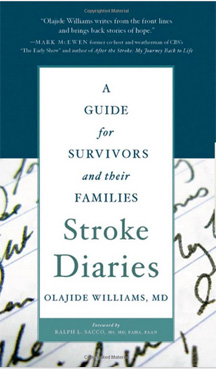 I had the distinct pleasure of reading Stroke Diaries this past week. Its author, Dr. Olajide Williams, is a dear friend and contributor to this blog. I first met Dr. Willliams (or Jide, pronounced “gee-day”) as a young neurology resident at Columbia Presbyterian Hospital. I was in my third year of medical school and rotating through the neurology service.
A few things struck me about Jide back then. First, he was the only resident who never got an answer wrong when put on the spot (aka “pimped”) by his superiors. I was in awe of his knowledge base — something he’d developed by disciplining himself to do additional reading long after his peers were asleep.
Second, Jide was always immaculately dressed — his stylish, brightly-colored shirts and ties complimented his dark skin and cheerful, British accent.
And third, his love for his patients and medical students was abundantly clear, as he always went out of his way to educate them in the most friendly and sensitive of ways. In short, Jide was an inspiration to me — as a teacher, a neurologist, and a friend.
Stroke Diaries is a reflection of Jide’s character — a perfect blend of poetic vignette and straightforward science. This short book (130 pages) chronicles the true life stories of various patients who’ve suffered strokes. Read more »
May 25th, 2010 by Davis Liu, M.D. in Better Health Network, Health Policy, Health Tips, Opinion, Quackery Exposed, Research
12 Comments »

A patient brought in a flyer for Life Line Screening, where for $129 an individual can have their carotid (neck) and peripheral (leg) arteries screened for blockage, their abdominal aorta screened for aneurysm (swelling), and be tested for osteoporosis. The advertisement claims that “we can help you avoid a stroke,” and their logo notes “Life Line Screening: The Power of Prevention.”
Are these tests worth your money? Short answer: No.
Although the flyer correctly indicates that 80 percent of stokes can be prevented, the National Stroke Assocation does not recommend ultrasound as a screening test. Preventing stroke includes quitting smoking, knowing your blood pressure and cholesterol numbers, drinking alcohol in moderation (if already doing so), exercising regularly, and eating a low-sodium diet. Their is no mention of an ultrasound test. Why? Because there is NO evidence that it helps save lives in individuals who are healthy and have no symptoms (except for the following situations). Read more »
*This blog post was originally published at Saving Money and Surviving the Healthcare Crisis*
May 25th, 2010 by Toni Brayer, M.D. in Better Health Network, Health Tips, News, Research
No Comments »

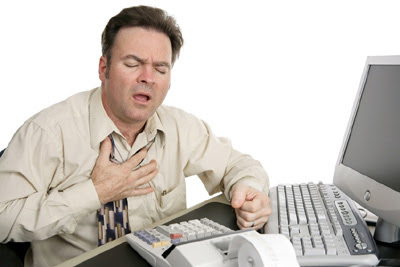 The European Heart Journal studied 6,000 British civil servants and followed them for 11 years. They found that working an extra 3 to 4 hours a day is associated with increased coronary heart disease.
The researchers controlled and adjusted for lifestyle, cardiac risk factors, and other factors that would skew the results, and still found that people who worked 3 to 4 extra hours a day had a 60 percent increase in risk for heart disease. Read more »
*This blog post was originally published at EverythingHealth*
May 25th, 2010 by Berci in Better Health Network, Health Policy, News, Opinion, Research
No Comments »

Here are a few papers and publications focusing on how social media can be used in medicine, healthcare and science. These represent the evidence-based approach in social media:
Google docs: a better method than a paper clinical schedule. Kippenbrock T, Holloway E, Moore DD. Comput Inform Nurs. 2010 May-Jun;28(3):138-40.
How to get the most from the medical literature: keeping up to date in nephrology. Cullis J, Webster AC. Nephrology (Carlton). 2010 Apr;15(3):269-76.
Twitter: consider the possibilities for continuing nursing education. Billings DM, Kowalski K, Bristol TJ. J Contin Educ Nurs. 2010 May;41(5):199-200.
Literature search on risk factors for sarcoma: PubMed and Google Scholar may be complementary sources. Mastrangelo G, Fadda E, Rossi CR, Zamprogno E, Buja A, Cegolon L. BMC Res Notes. 2010 May 10;3(1):131.
Effect of visual media use on school performance: a prospective study. Sharif I, Wills TA, Sargent JD. J Adolesc Health. 2010 Jan;46(1):52-61.
Patients’ Evaluations of Health Care Providers in the Era of Social Networking: An Analysis of Physician-Rating Websites. Lagu T, Hannon NS, Rothberg MB, Lindenauer PK. J Gen Intern Med. 2010 May 13.
Tweeting science and ethics: social media as a tool for constructive public engagement. Regenberg AC. Am J Bioeth. 2010 May;10(5):30-1.
*This blog post was originally published at ScienceRoll*
May 25th, 2010 by CynthiaHainesMD in Better Health Network, Health Tips, Research
1 Comment »

“I never worry about action, but only about inaction.” — Winston Churchill
Winston Churchill was right: Experts are saying sedentary behavior is an epidemic, with the resulting health effects potentially devastating.
Lack of muscular activity is associated with higher incidence of obesity, cardiovascular disease, diabetes and cancer, as well as a heightened risk of death. And this is regardless of one’s level of structured physical exercise, according to the authors of an article published [recently] in the British Journal of Sports Medicine.
The team from Stockholm, Sweden, says that sedentary behavior has become synonymous with lack of exercise, but that this is inaccurate and misleading. Rather, sedentary behavior should be defined as whole body muscular inactivity. Read more »