December 3rd, 2009 by RamonaBatesMD in Better Health Network, Health Tips
No Comments »

 There is a very nice review article in the “throw away” journal Advances in Skin & Wound Care (full reference below) which discusses the causes and management of peristomal skin complications. The photo (credit) to the right shows normal, healthy skin around a stoma.
Peristomal complications are one of the most challenging aspects of living with ostomies. The purpose of this review article was stated to be “to illustrate practical approaches to prevent and treat common peristomal skin conditions.” Read more »
*This blog post was originally published at Suture for a Living*
December 3rd, 2009 by Shadowfax in Better Health Network, Health Tips, Research
No Comments »

I love graphs, especially interactive graphs.
GE made a graph of the average annual cost of patients with eleven common chronic diseases. Go check it out, marvel at the coolness as you grab the sliders and spin the wheel o’ misfortune. Take home point: hypertension is the single biggest driver of medical cost in all patients age 33 and up. Go figure.

*This blog post was originally published at Movin' Meat*
December 3rd, 2009 by Bryan Vartabedian, M.D. in Better Health Network, Opinion
8 Comments »
I see it from time to time. The doctor with a voice who’s uncomfortable with transparency. They post and comment under the cozy blanket of putative anonymity. But it’s bad policy. Here’s why doctors need to be outed in social media:
Anonymity is a fantasy. It’s remarkably difficult to achieve. With small thoughts you can hide – in fact, no one cares who you are. If you offer anything worth hearing people will ultimately find out who you are. And the plaintiff attorneys will always sniff you out.
You need a reality check. Anonymity gives us phony security and opens the door for us to say the things we wouldn’t normally say. There’s no editorial influence more powerful than knowing that my patients and my boss are listening. While an incendiary rant may serve to vent frustrations and drive traffic, it just fuels the perception of doctors as cynical, frustrated folks. And we don’t need help with that. Read more »
December 2nd, 2009 by Dr. Val Jones in Humor, True Stories
2 Comments »
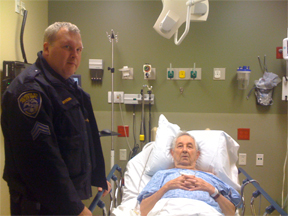 My father in law is 83 years old. He has high blood pressure, high cholesterol, and occasional “senior moments.” He rarely complains about anything, and spends most of his time doing household chores, playing with grand kids, and watching TV. So it was with some degree of concern that I raised my head from my morning cereal when George announced at the breakfast table that he was having chest pain.
I looked at him with narrowed, clinical eyes and began asking the usual rule out MI type questions – did it feel like pressure? Where was the pain exactly? When did it start? Does anything make it better or worse? Does it radiate down your arm or up your jaw? Have you ever had this pain before? How severe is it on a scale of 1-10? Read more »
December 2nd, 2009 by Richard Cooper, M.D. in Better Health Network, Health Policy, Opinion
No Comments »

According to MedPAC, 18% of hospitalizations among Medicare beneficiaries resulted in readmission within 30 days, accounting for $15 billion in spending. Since treatable chronic illnesses are responsible for many such hospitalizations, it is assumed that they represent failures of the health care system. MedPAC claims that 84% of readmissions are potentially preventable. However, as will become evident, most readmissions reflect differences in co-morbidities, poverty and other social determinants, all of which deserve attention, including better transition care, but few of which are under the control of hospitals. Nonetheless, health care reform assumes that regulators can accurately adjust for such risks and estimate the “excess.”
Both the House and Senate bills include reductions in payments to hospitals with “excess” readmissions. Payment would be reduced 20% for “excess” readmissions within seven days and 10% within fifteen days. Hospitals with 30-day risk-adjusted readmission rates above the 75th percentile would incur penalties of 10-20%, scaled to the time to readmission. Read more »
*This blog post was originally published at PHYSICIANS and HEALTH CARE REFORM Commentaries and Controversies*


 There is a very nice review article in the “throw away” journal Advances in Skin & Wound Care (full reference below) which discusses the causes and management of peristomal skin complications. The photo (credit) to the right shows normal, healthy skin around a stoma.









