July 7th, 2014 by admin in Humor, Quackery Exposed, Research
No Comments »
 Twenty years ago I started my job as ‘Professor of Complementary Medicine’ at the University of Exeter and became a full-time researcher of all matters related to alternative medicine. One issue that was discussed endlessly during these early days was the question whether alternative medicine can be investigated scientifically. There were many vociferous proponents of the view that it was too subtle, too individualised, too special for that and that it defied science in principle. Alternative medicine, they claimed, needed an alternative to science to be validated. I spent my time arguing the opposite, of course, and today there finally seems to be a consensus that alternative medicine can and should be submitted to scientific tests much like any other branch of health care.
Looking back at those debates, I think it is rather obvious why apologists of alternative medicine were so vehement about opposing scientific investigations: they suspected, perhaps even knew, that the results of such research would be mostly negative. Once the anti-scientists saw that they were fighting a lost battle, they changed their tune and adopted science – well sort of: they became pseudo-scientists (‘if you cannot beat them, join them’). Their aim was to prevent disaster, namely the documentation of alternative medicine’s uselessness by scientists. Meanwhile many of these ‘anti-scientists turned pseudo-scientists’ have made rather surprising careers out of their cunning role-change; professorships at respectable universities have mushroomed. Yes, pseudo-scientists have splendid prospects these days in the realm of alternative medicine.
The term ‘pseudo-scientist’ as I understand it describes a person who thinks he/she knows the truth about his/her subject well before he/she has done the actual research. A pseudo-scientist is keen to understand the rules of science in order to corrupt science; he/she aims at using the tools of science not to test his/her assumptions and hypotheses, but to prove that his/her preconceived ideas were correct.
So, how does one become a top pseudo-scientist? During the last 20 years, I have observed some of the careers with interest and think I know how it is done. Here are nine lessons which, if followed rigorously, will lead to success (… oh yes, in case I again have someone thick enough to complain about me misleading my readers: THIS POST IS SLIGHTLY TONGUE IN CHEEK).
- Throw yourself into qualitative research. For instance, focus groups are a safe bet. This type of pseudo-research is not really difficult to do: you assemble about 5 -10 people, let them express their opinions, record them, extract from the diversity of views what you recognise as your own opinion and call it a ‘common theme’, write the whole thing up, and – BINGO! – you have a publication. The beauty of this approach is manifold: 1) you can repeat this exercise ad nauseam until your publication list is of respectable length; there are plenty of alternative medicine journals who will hurry to publish your pseudo-research; 2) you can manipulate your findings at will, for instance, by selecting your sample (if you recruit people outside a health food shop, for instance, and direct your group wisely, you will find everything alternative medicine journals love to print); 3) you will never produce a paper that displeases the likes of Prince Charles (this is more important than you may think: even pseudo-science needs a sponsor [or would that be a pseudo-sponsor?]).
- Conduct surveys. These are very popular and highly respected/publishable projects in alternative medicine – and they are almost as quick and easy as focus groups. Do not get deterred by the fact that thousands of very similar investigations are already available. If, for instance, there already is one describing the alternative medicine usage by leg-amputated police-men in North Devon, and you nevertheless feel the urge of going into this area, you can safely follow your instinct: do a survey of leg-amputated police men in North Devon with a medical history of diabetes. There are no limits, and as long as you conclude that your participants used a lot of alternative medicine, were very satisfied with it, did not experience any adverse effects, thought it was value for money, and would recommend it to their neighbour, you have secured another publication in an alternative medicine journal.
- Take a sociological, anthropological or psychological approach. How about studying, for example, the differences in worldviews, the different belief systems, the different ways of knowing, the different concepts about illness, the different expectations, the unique spiritual dimensions, the amazing views on holism – all in different cultures, settings or countries? Invariably, you will, of course, conclude that one truth is at least as good as the next. This will make you popular with all the post-modernists who use alternative medicine as a playground for getting a few publications out. This approach will allow you to travel extensively and generally have a good time. Your papers might not win you a Nobel prize, but one cannot have everything.
- Do a safety study. It could well be that, at one stage, your boss has a serious talk with you demanding that you start doing what (in his narrow mind) constitutes ‘real science’. He might be keen to get some brownie-points at the next RAE and could thus want you to actually test alternative treatments in terms of their safety and efficacy. Do not despair! Even then, there are plenty of possibilities to remain true to your pseudo-scientific principles. By now you are good at running surveys, and you could, for instance, take up your boss’ suggestion of studying the safety of your favourite alternative medicine with a survey of its users. You simply evaluate their experiences and opinions regarding adverse effects. But be careful, you are on somewhat thinner ice here; you don’t want to upset anyone by generating alarming findings. Make sure your sample is small enough for a false negative result, and that all participants are well-pleased with their alternative medicine. This might be merely a question of selecting your patients cleverly. The main thing is that your conclusion is positive. If you want to go the extra pseudo-scientific mile, mention in the discussion of your paper that your participants all felt that conventional drugs were very harmful.
- Publish case reports. If your boss insists you tackle the daunting issue of therapeutic efficacy, there is no reason to give up pseudo-science either. You can always find patients who happened to have recovered spectacularly well from a life-threatening disease after receiving your favourite form of alternative medicine. Once you have identified such a person, you write up her experience in much detail and call it a ‘case report’. It requires a little skill to brush over the fact that the patient also had lots of conventional treatments, or that her diagnosis was assumed but never properly verified. As a pseudo-scientist, you will have to learn how to discretely make such irritating details vanish so that, in the final paper, they are no longer recognisable. Once you are familiar with this methodology, you can try to find a couple more such cases and publish them as a ‘best case series’ – I can guarantee that you will be all other pseudo-scientists’ hero!
- Publish a case series. Your boss might point out, after you have published half a dozen such articles, that single cases are not really very conclusive. The antidote to this argument is simple: you do a large case series along the same lines. Here you can even show off your excellent statistical skills by calculating the statistical significance of the difference between the severity of the condition before the treatment and the one after it. As long as you show marked improvements, ignore all the many other factors involved in the outcome and conclude that these changes are undeniably the result of the treatment, you will be able to publish your paper without problems.
- Rig the study design. As your boss seems to be obsessed with the RAE and all that, he might one day insist you conduct what he narrow-mindedly calls a ‘proper’ study; in other words, you might be forced to bite the bullet and learn how to plan and run an RCT. As your particular alternative therapy is not really effective, this could lead to serious embarrassment in form of a negative result, something that must be avoided at all cost. I therefore recommend you join for a few months a research group that has a proven track record in doing RCTs of utterly useless treatments without ever failing to conclude that it is highly effective. There are several of those units both in the UK and elsewhere, and their expertise is remarkable. They will teach you how to incorporate all the right design features into your study without there being the slightest risk of generating a negative result. A particularly popular solution is to conduct what they call a ‘pragmatic’ trial, I suggest you focus on this splendid innovation that never fails to produce anything but cheerfully positive findings.
- Play with statistics until you get the desired result. It is hardly possible that this strategy fails – but once every blue moon, all precautions turn out to be in vain, and even the most cunningly designed study of your bogus therapy might deliver a negative result. This is a challenge to any pseudo-scientist, but you can master it, provided you don’t lose your head. In such a rare case I recommend to run as many different statistical tests as you can find; chances are that one of them will nevertheless produce something vaguely positive. If even this method fails (and it hardly ever does), you can always home in on the fact that, in your efficacy study of your bogus treatment, not a single patient died. Who would be able to doubt that this is a positive outcome? Stress it clearly, select it as the main feature of your conclusions, and thus make the more disappointing findings disappear.
- Create confirmatory studies that follow your rigged design and faulty statistics. Now that you are a fully-fledged pseudo-scientist who has produced one misleading or false positive result after the next, you may want a ‘proper’ confirmatory study of your pet-therapy. For this purpose run the same RCT over again, and again, and again. Eventually you want a meta-analysis of all RCTs ever published. As you are the only person who ever conducted studies on the bogus treatment in question, this should be quite easy: you pool the data of all your trials and, bob’s your uncle: a nice little summary of the totality of the data that shows beyond doubt that your therapy works. Now even your narrow-minded boss will be impressed.
These nine lessons can and should be modified to suit your particular situation, of course. Nothing here is written in stone. The one skill any pseudo-scientist must have is flexibility.
Every now and then, some smart arse is bound to attack you and claim that this is not rigorous science, that independent replications are required, that you are biased etc. etc. blah, blah, blah. Do not panic: either you ignore that person completely, or (in case there is a whole gang of nasty skeptics after you) you might just point out that:
- your work follows a new paradigm; the one of your critics is now obsolete,
- your detractors fail to understand the complexity of the subject and their comments merely reveal their ridiculous incompetence,
- your critics are less than impartial, in fact, most are bought by BIG PHARMA,
- you have a paper ‘in press’ that fully deals with all the criticism and explains how inappropriate it really is.
In closing, allow me a final word about publishing. There are hundreds of alternative medicine journals out there to chose from. They will love your papers because they are uncompromising promotional. These journals all have one thing in common: they are run by apologists of alternative medicine who abhor to read anything negative about alternative medicine. Consequently hardly a critical word about alternative medicine will ever appear in these journals. If you want to make double sure that your paper does not get criticised during the peer-review process (this would require a revision, and you don’t need extra work of that nature), you can suggest a friend for peer-reviewing it. In turn, you can offer to him/her that you do the same to him/her the next time he/she has an article to submit. This is how pseudo-scientists make sure that the body of pseudo-evidence for their pseudo-treatments is growing at a steady pace.
***
Dr. Ernst is a PM&R specialist and the author of 48 books and more than 1000 articles in the peer-reviewed medical literature. His most recent book, Trick or Treatment? Alternative Medicine on Trial is available from amazon. He blogs regularly at EdzardErnst.com and contributes occasionally to this blog.
February 10th, 2014 by admin in Health Tips, News, Quackery Exposed
6 Comments »
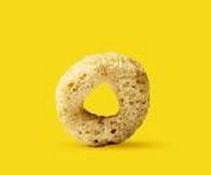 Make no mistake about it. General Mills’ introduction of Cheerios sporting the label “Not Made With Genetically Modified Ingredients” is a mere marketing ploy and has nothing to do with health or nutrition. Let’s start the dissection of this blatant attempt to capitalize on the anti-GMO paranoia by looking at the main ingredient in Cheerios, namely oats. Samuel Johnson, the 18th century writer who compiled the first authoritative dictionary of the English language whimsically defined oats as the grain “eaten by people in Scotland, but fit only for horses in England.” A clever Scot supposedly retorted “that’s why England has such good horses, and Scotland has such fine men!”
Modern science, as it turns out, supports the ancient Scotch penchant for oats. A form of soluble fiber in the grain known as beta glucan has been shown to reduce levels of cholesterol in the blood which in turn is expected to reduce the risk of heart disease. You couldn’t tell this by the Scottish experience, though. Scotland has one of the highest rates of heart disease in the world. It seems all that haggis, refined carbs and a lack of veggies is too great a challenge for Scotch oats to cope with. Actually you need at least 3 grams of beta glucan daily to have any effect on blood cholesterol and that translates to roughly a cup of cooked oat bran or a cup and a half of oatmeal. Or about three servings of Cheerios. And that makes the cholesterol lowering claims prominently featured on the Cheerios box ring pretty hollow. There are far better ways to reduce cholesterol than gorging on Cheerios.
At least, though, the cholesterol lowering claim has some scientific merit. The “no GMO” claim has none. To start with, there are no genetically modified oats grown anywhere, at least not in the current sense of the term which refers to the splicing of specific foreign genes into the DNA of a seed. Such “recombinant DNA technology: is generally used to confer resistance to herbicides or protection from insects, but resistance to drought and enhancement with nutrients hold great potential. Although it is this new-fangled technology that garners attention these days, the fact is that virtually everything we eat has been genetically modified in some fashion over the years, either by traditional crossbreeding or through the use of chemicals or radiation both of which can scramble the genetic material in crops. The latter processes are based on the hope that a useful mutation will occur by chance, but basically it comes down to a roll of the dice. Just do enough experiments and a valuable mutant may surface. Radiation breeding has produced many varieties of rice, wheat, peanuts and bananas that are now widely grown. If you are eating red grapefruit, or sipping premium Scotch whisky made from barley, you are enjoying the products of this technology.
So if “genetically modified” oats do not exist, what sort of monsters is General Mills protecting us from? As is the case with any commercial cereal, Cheerios contains a number of ingredients with nutritious whole grain oats at the top of the list. Next come modified corn starch and sugar. It is to these two ingredients that General Mills refers when it talks about “GMO-free.” Much of the corn and some of the sugar beets grown in North America are genetically modified to resist herbicides and ward off insects. But by the time the highly processed starch and sugar extracted from these plants reach the food supply, they retain no vestige of any genetic modification. There is no way to distinguish the starch or sugar derived from genetically modified plants from the conventional varieties. The GMO-free Cheerios will not differ in any way from the currently marketed version except that the price may eventually reflect the greater cost of sourcing ingredients from plants that do not benefit from recombinant DNA technology.
The reason for the addition of sugar to Cheerios, actually in small doses compared with other cereals, is obvious. But why is corn starch added, and why is it modified? Nobody likes soggy cereal, and a thin layer of modified starch sprayed onto the little “O”s helps keep the interior dry. The modification in this case has nothing to do with genetic modification. Starch is a mixture of essentially two “polymers,” or giant molecules, both composed of units of glucose joined together. In amylose, the glucose units form a straight chain, while in amylopectin, the main glucose strand features many branches of shorter glucose chains. The properties of any starch depend on the relative proportion of amylose and amylopectin as well as on the degree of branching.
Starch has many uses in the food industry. It can thicken sauces, prevent French dressing from separating, substitute for fat or keep cereals dry. But these uses require starches of specific composition, either in terms of the length of the glucose chains or the degree of branching. In other words, the native starch has to be “modified” by treatment with acids, enzymes or oxidizing agents. There is no safety issue here, modified starches are approved food additives. Of course that doesn’t prevent scientifically illiterate alarmists from scaring the public by blathering on about modified starch being used as wallpaper glue and insinuating that any food made with it will literally stick to our ribs. The modified starch used in glue, namely a “carboxymethylated” version, is not the same as used in food, but even if it were, so what? Just because water can be used to clean garage floors and is found in tumours doesn’t mean we can’t drink it. Talking about washing garage floors, Cheerios also contains tripotassium phosphate, a powerful cleaning agent. It is added in small amounts to adjust the acidity of the mix used to formulate the cereal. This too has raised the ire of some ill-informed activists who do not realize that we consume all sorts of naturally occurring phosphates regularly in our diet. Quacking about the dangers of tripotassium phosphate in Cheerios makes about as much sense as hyping Cheerios that are “Not Made With Genetically Modified Ingredients.”
***
Joe Schwarcz, Ph.D., is the Director of McGill University’s Office for Science and Society and teaches a variety of courses in McGill’s Chemistry Department and in the Faculty of Medicine with emphasis on health issues, including aspects of “Alternative Medicine”. He is well known for his informative and entertaining public lectures on topics ranging from the chemistry of love to the science of aging. Using stage magic to make scientific points is one of his specialties.
November 19th, 2013 by admin in Health Policy, Health Tips, Humor
No Comments »
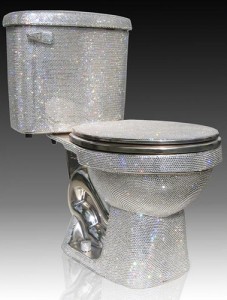 November 19 is International Toilet Day. That may sound funny, but it is a serious event. It is a day to contemplate what we have and others don’t. As we sit in privacy on our comfortable flush toilets today, it is hard to imagine that a scant two hundred years ago sewage disposal meant emptying chamber pots into the nearest convenient place, which was often the street.
If you were out for a walk in Britain in the 18th century and heard the cry “gardy-loo,” you had better scamper across the street because the contents of a chamber pot were set to be hurled your way from a window. The expression derives from the French “regardez l’eau” and was commonly heard as chambermaids carried out their duties. Some even suggest that the custom of a gentleman walking on the outside when accompanying a lady can be traced to the desire to protect the fair sex from the trajectory of the chamber pot’s contents.
What may be even harder to imagine than the sidestepping of flying fecal matter is that roughly a third of the world’s population today cannot easily sidestep the problems associated with exposure to untreated sewage because of a lack of access to a toilet. As a consequence, diarrheal disease is rampant, killing more children than AIDS, malaria and measles combined. In developing countries a child dies every twenty seconds as a result of poor hygiene. Mahatma Gandhi recognized the problem when he proclaimed in 1925 that “sanitation is more important than independence.”
The invention of the flush toilet and the introduction of plumbing for sewage disposal mark two of the most significant advances in history. Let’s get one of the toilet myths out of the way right away. Contrary to numerous popular accounts, Thomas Crapper did not invent the flush toilet! It is easy to see how connecting his name with the invention would make for a compelling tale, but what we actually have here is a prime example of the classic journalistic foible, “a story that is too good to check.”
Almost all accounts of the Crapper saga claim that a 1969 book by Wallace Reyburn, cleverly titled “Flushed with Pride-The Story of Thomas Crapper” establishes Crapper as the inventor of the flush toilet. Reyburn actually says no such thing. The book is an entertaining celebration of the life and times of Crapper, the man who “revolutionized the nations’ water closets.” Indeed, that he did do. But flush toilets were around long before Thomas Crapper ever got into the game in the 19th century.
The first flush toilet appeared as early as 1700 B.C. The Palace of Knossos on the island of Crete, built around that time featured a toilet with an overhanging cistern that dispensed water when a plug was removed. Curiously it would take another three thousand years until the next step in flushing technology was taken by Sir John Harrington, godson of Queen Elizabeth I. In 1596 Harrington installed a “water closet” in the Royal Palace that featured a pipe fitted with a valve connected to a raised water tank. Opening the valve released the water that would carry waste into a cesspool. Apparently the Queen was not overly pleased with the invention because odours from the cesspool wafted up into the Royal powder room. It would take another couple of centuries before this problem was addressed.
The first patent for a flushing toilet designed to keep sewer gases from seeping back was issued to Alexander Cummings in 1775. Cummings designed a system that allowed some water to remain in the bowl after each flush, preventing the backflow of odours. Joseph Bramah attempted to improve upon this system with a sophisticated valve that was supposed to seal the waste pipe after each flush. While it didn’t work perfectly, Bramah’s toilet was introduced at just the right time because London was beginning to install sewage systems. Some 6000 Bramah toilets soon dotted the city’s landscape. And then about a hundred years later, along came Thomas Crapper.
In 1861 the Thomas Crapper plumbing company opened for business in London. The time was ripe for the sale of plumbing supplies because the need for proper sanitation was being firmly established. A public report issued in the city of Leeds claimed a significantly higher death rate among children who lived in “dirty” streets where sewage flowed openly. And in 1854 physician John Snow had pinpointed the homes in London where someone had contracted cholera during an epidemic and traced the problem to water contaminated with sewage being dispensed from a pump in Broad Street. The need to flush away problems associated with sewage was becoming clear.
There is no question that Crapper made significant improvements in toilet technology. He invented a pull-chain system for flushing, and an air tight seal between the toilet and the floor. Crapper was also responsible for installing plumbing at Westminster Abbey where to this day visitors can view the manhole covers clearly displaying the name “Thomas Crapper Co.” What he was not responsible for was the introduction of the word “crap” into our vocabulary. That term meaning “refuse” predates Crapper by several centuries.
It is virtually impossible to attribute the numerous improvements in toilet technology since Crapper’s time to individuals. There are patents galore for eliminating overflow, reducing water usage, curbing noise, improving waste removal from the side of the bowl, devices to alert night time users if the seat is up and gimmicks to encourage men to aim properly. And the future may belong to toilets equipped with biosensors that automatically monitor urine and feces for health indicators such as sugar and blood. But for now, just think of the amazing technology that allows for the removal of the roughly 200 grams of poo we deposit per person per day. That’s a stunning 600,000 kilos in a city of three million!
So on November 19, as we get comfy on our high tech toilets, ready to flush away the remnants of a scrumptious meal, a roll of soft toilet paper and fragrant soap by our side, let’s give a thought to how we can help those unlucky enough to have been born in a place where “gardy-loo” still rings true.
***
Joe Schwarcz, Ph.D., is the Director of McGill University’s Office for Science and Society and teaches a variety of courses in McGill’s Chemistry Department and in the Faculty of Medicine with emphasis on health issues, including aspects of “Alternative Medicine”. He is well known for his informative and entertaining public lectures on topics ranging from the chemistry of love to the science of aging. Using stage magic to make scientific points is one of his specialties.
June 3rd, 2013 by admin in Opinion, Quackery Exposed
No Comments »
 Dr. Oz is a powerful guy, blessed with a name that conjures up wizardry. He just unveils his latest “miracle,” which seems to happen on an almost daily basis, and people scamper off to the nearest the health food. Recently the great Oz anointed the oil extracted from the fruit of the palm tree that grows in Indonesia and Malaysia as a wonder product that can aid weight loss and reduce the risk of Alzheimer’s and heart disease. Introduced to this marvel by his a guest, a homeopath, Dr. Oz excitedly gushed about the beta carotene and “special form of vitamin E” found in “red palm oil.” A curious business. Tell me, does a Professor of Surgery at Columbia University with over 400 research publications under his belt really need advice on nutrition from a homeopath?
As is usually the case with Oz’s miracles, there is a seed of truth that then gets fertilized with lots of verbal manure until it grows into a tree that bears fruit dripping with unsubstantiated hype. For example, one study did show a reduction in the severity of cholesterol-induced atherosclerosis in rabbits fed high doses of red palm oil. This has little relevance for humans but magicians who pull rabbits out of hats may consider adding red palm oil to the diet of their little assistant. The red colour of the oil comes from beta-carotene, the same substance that contributes to the hue of carrots and many other fruits and vegetables. It is the body’s precursor for vitamin A, which makes it an important nutrient.
Unfortunately, in many areas of the developing world there is a shortage of both beta carotene and vitamin A in the diet leading to a high incidence of blindness, skin problems and even death. In such cases red palm oil would be useful, but of course there are numerous other ways to introduce beta-carotene into the diet including “golden rice” that has been genetically modified to provide the nutrient. Aside from remedying a vitamin A deficiency, there is not much evidence for increased intake of beta carotene outside of that contained in a balanced diet. There are suggestions that higher blood levels of beta carotene reduce the risk of breast cancer in high-risk women, but the beta-carotene levels may just be a marker for a better diet.
As far as the Alzheimer’s connection goes, Oz may have been referring to a study in which 74 seniors with mild dementia were compared with 158 healthy seniors. People with dementia had lower levels of beta-carotene and vitamin C in their blood. Again, this does not prove that the lower levels are responsible for the condition, they may just signal a diet that is poorer in fruits and vegetables. Tocotrienols, the “special form of vitamin E” Oz talked about, have shown some borderline effects in Alzheimer’s patients at doses way higher than found in red palm oil. There is no evidence for preventing the disease.
What about the claim that red palm oil causes loss of belly fat? That seems to come from a rat study in which a tocotrienol-rich fraction extracted from palm oil caused a reduction in fat deposits in the omentum, the tissue that surrounds organs. There was no evidence of abdominal fat reduction, and furthermore, the study involved putting the animals on an unnatural and unhealthy diet. But these are not the facts that the audience was treated to on the Dr. Oz Show.
What the eager viewers witnessed were three visually captivating but totally irrelevant demonstrations of the purported health benefits of red palm oil. First in line was a piece of apple that had turned brown because of “oxidation.” This could be prevented with a squirt of lemon juice, Oz explained. Then came the claim that red palm oil protects our brain the same way that lemon juice protects the apple. This is absurd. Vitamin C inactivates polyphenol oxidase, the enzyme that allows oxygen to react with polyphenols in the apple resulting in the browning. The human brain, however, bears no resemblance to an apple, except perhaps for the brains of those who think it does. Yes, oxidation is a process that goes on in the human body all the time and has been linked with aging but suggesting that beta-carotene because of its antioxidant effects protects the brain like lemon juice protects the apple is inane.
Just as zany was the next demo in which two pieces of plastic half-pipe representing arteries were shown with clumps of some white guck, supposedly deposits that lead to heart disease. Oz poured a gooey liquid, representing “bad fats” down one of the tubes, highlighting that it stuck to the goo. Then he proceeded to pour red palm oil down the other pipe and lo and behold, the deposits washed away. Totally meaningless and physiological nonsense. The homeopath then explained that saturated fats behave like thick molasses cruising through the cardiovascular system, but palm oil does not, despite being high in saturated fats. While saturated fats may lead to deposits, they do not do this by “thickening” the blood. Arterial deposits are the result of some very complex biochemistry and are not caused by “sludge” in the blood. Oz even exclaimed that this demo was indicative of how red palm oil reduces cholesterol in a month by 40%, better than drugs. A search of Pubmed reveals no such study.
The final demonstration involved Dr. Oz lighting a candle and a flare, without wearing safety glasses mind you. The message seemed to be that the body burns most fats slowly, but it burns red palm oil with great efficiency, preventing weight gain. Where does this come from? Possibly some confusion about medium chain triglycerides which are somewhat faster metabolized than other fats. But these are not found in palm oil. They are found in coconut oil and palm kernel oil. Oz and his homeopath expert were as confused about this as about the rest of red palm oil info they belched out.
Aside from scientists who took issue with the misleading information, animal rights groups also attacked Oz’ exhortations about the benefits of the oil claiming that it will lead to destroying larger stretches of the jungle, home to many wild creatures including the orangutan. They maintain that when the jungle is cleared every living creature is either captured or killed and adult orangutans are often shot on sight. A tragedy. Another tragedy is that Dr. Oz could be doing so much good if he just focused on real science, as he sometimes does, instead of drooling over the latest “miracle” as presented by some pseudo expert.
***
Joe Schwarcz, Ph.D., is the Director of McGill University’s Office for Science and Society and teaches a variety of courses in McGill’s Chemistry Department and in the Faculty of Medicine with emphasis on health issues, including aspects of “Alternative Medicine”. He is well known for his informative and entertaining public lectures on topics ranging from the chemistry of love to the science of aging. Using stage magic to make scientific points is one of his specialties.
May 8th, 2013 by admin in Better Health Network, Health Tips, Quackery Exposed
No Comments »
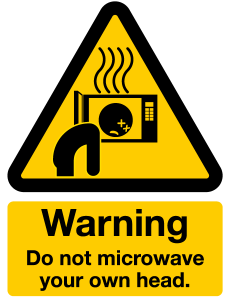 Cell phones, microwave ovens, wi-fi, smart meters. What do they have in common? They all emit radiation in the radiofrequency range. And they all radiate controversy. Given that these devices are set to become as commonplace as light bulbs, it is understandable that questions arise about their possible health effects. There are all sorts of allegations that exposure can trigger ailments ranging from headaches to cancer. Allegations, however, do not amount to science. And there is a lot of science to be considered.
Let’s start with the fact that an alternating current flowing through a wire generates an electromagnetic field around it. This field can be thought of as being made up of discrete bundles of energy called “photons” that are created as the electrons in the wire flow first in one direction then in the other. Photons spread out from the wire, their energy depending on the frequency with which the current changes direction. The number of photons emitted, referred to as the ‘intensity’ or ‘power” of the radiation, depends on the voltage, the current and the efficiency of the circuit to act as an antenna.
In ordinary household circuits, the direction of the current changes sixty times a second, that is, it has a frequency of 60 Hz, the unit being named after Heinrich Rudolf Hertz, the first scientist to conclusively prove the existence of electromagnetic waves. The photons emitted by such a circuit travel through space and have the capacity to induce a 60Hz current in any conducting material they encounter. Essentially, we have a “transmitter” and a “receiver.” If special circuitry is used to produce current in the range of 10 million (10MHz) to 300 billion Hz (300 GHz), the photons emitted are said to be in the radiofrequency region of the electromagnetic spectrum. That’s because with appropriate modulation at the transmitter (amplitude modulation (AM), or frequency modulation (FM)) these photons can induce a current in an antenna that can be converted into sounds or images.
But what happens when photons in this energy range interact with living tissue, such as our bodies? The greatest concern would be the breaking of bonds between atoms in molecules. Disrupting the molecular framework of proteins, fats and particularly nucleic acids can lead to all sorts of problems, including cancer. However, photons associated with radiofrequencies do not have enough energy to do this, no matter what their intensity. An analogy may be in order.
Consider a weather vane sitting on a roof. It is mounted on a sturdy metal rod, but of course can spin. You decide you want to knock it off the roof, but all you have are tennis balls. You start throwing the balls, but even if you hit the support, nothing happens. You just can’t impart enough energy to the ball to have it break a metal rod. And it doesn’t matter if you gather all your friends, and they all throw balls at the same time. You may have increased the “intensity” of your efforts, but it doesn’t matter, because no ball has enough energy. Of course if you had a cannon, you could knock down the target with one shot. That’s why high energy photons such as generated by very high frequency currents, as in x-rays, are dangerous. They can break chemical bonds! While you are not going to damage the weather vane with the tennis balls, you can surely make it spin, and the friction generated will heat up the base, the extent depending on how many balls are thrown.
Now, back to our photons. In the radiofrequency region, no photon has enough energy to break chemical bonds, but they can make molecules move around, generating heat. The more photons released, the greater the heating effect. This is exactly how microwave ovens work. They operate at radiofrequencies, but at a very high intensity or “power” level, meaning they bombard the food with lots of photons causing the food to heat up. You certainly wouldn’t want to crawl into a working microwave oven and close the door behind you. Similarly, you wouldn’t want to stand right next to a high power radio transmitting antenna, such as used by radio or TV stations, because you could get burned very badly. But the number of photons encountered drops very quickly with distance as they spread out in all directions, so that even standing a few meters from the base of such an antenna would not cause any sensation of heat. Just think of how quickly the heat released by a light bulb drops off with distance.
The “smart meters” that are being installed by electrical utilities monitor the use of electricity and relay the information via a built-in radio transmitter. But the radiation to which people are exposed from these meters quickly drops off with distance, as with the light bulb, and is way below established safety limits. Furthermore, the smart meters only transmit for a few milliseconds at a time for a grand total of a few minutes a day! Cordless phones, cell phones, routers, baby monitors, video game controls and especially operating microwave ovens expose us to similar radiation, usually at far higher levels. Smart meters are responsible for a very small drop in the radiofrequency photon bucket.
It must be pointed out, though, that safety standards are essentially based on the heating of tissues. But what about the possibility of “non-thermal” effects? What if radiofrequency photons cause damage by some other mysterious mechanism? Over the last 30 years more than 25,000 peer-reviewed papers have been published on electromagnetic fields and health, many devoted to non-thermal effects. Health agencies do not find present evidence persuasive of a hazard at ordinary exposure levels, and given the extent of research that has been carried out, it is unlikely that one will be identified in the future.
Although an overwhelming number of studies on cell phones and brain cancer have shown no effect, admittedly some have suggested a barely detectable link. Despite the weak evidence, the International Agency for Research on Cancer has classified electromagnetic fields associated with radiofrequencies as “possibly carcinogenic,” indicating a level of suspicion without any implication that the fields actually cause cancer. This notion pertains to cell phone use and has nothing to do with the far weaker fields associated with wi-fi and smart meters. I would have no issue with a smart meter in my house.
What then about those consumers who claim they have developed symptoms after smart meters were installed? I think it is appropriate to consider John Milton’s poetic view of the power of imagination: “The mind is its own place, and in itself can make a heaven of hell and a hell of heaven.”
***
Joe Schwarcz, Ph.D., is the Director of McGill University’s Office for Science and Society and teaches a variety of courses in McGill’s Chemistry Department and in the Faculty of Medicine with emphasis on health issues, including aspects of “Alternative Medicine”. He is well known for his informative and entertaining public lectures on topics ranging from the chemistry of love to the science of aging. Using stage magic to make scientific points is one of his specialties.