Well, here’s a treat: Dr. Charles Smith, a founder of the Society for Participatory Medicine, recently gave a lecture at Duke entitled, “How to Become a More Effective e-Patient.” Here it is, in four video segments.
“Charlie” (as we all call him) is a wonderful guy. He’s co-editor-in-chief of the Journal of Participatory Medicine and was Doc Tom Ferguson’s physician. He’s been walking this walk for many years, and here he shares his personal advice –- not just for patients, but for health professionals who want to learn this participatory thing.
(The “Joe & Terry” he mentions are our founders Joe and Terry Graedon of People’s Pharmacy, longtime Duke associates.)
PART 1
An audio-only version is also available (see below). Read more »
*This blog post was originally published at e-Patients.net*
Next in our series of posts about our founder Doc Tom. Previous time capsules: 1980 and 1985.
Come, ye economics buffs and algebra fans: Get out your pencils and solve for x, n, and XX:
Whatever else the year 19XX is remembered for, it will — without a doubt — go down in history as a record year for medical expenses here in the United States. All indications are that before the calendar year is out, Americans will have spent $x (n% of the Gross National Product) on drugs, X-rays, surgery, physicians’ fees, laboratory tests, hospital overhead, health insurance, etc. That’s up from the [$0.3x] ([.7n%] of GNP) just 13 years ago.
Clearly, the medical establishment has become a threat to the average American’s budget (if not his health).
Ready? That was…1978. Check the tiny numbers:
Whatever else 1978 is remembered for, it will—without a doubt—go down in history as a record year for medical expenses here in the United States. All indications are that before the calendar year is out, 216 million Americans will have spent $139 billion (8.6% of the Gross National Product) on drugs, X-rays, surgery, physicians’ fees, laboratory tests, hospital overhead, health insurance, etc. That’s up from the $39 billion (5.9% of GNP) medical care cost in 1965 . . . just 13 years ago.
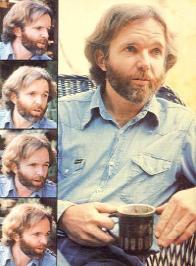
Tom Ferguson was a medical student, and in the self-reliant era of the Whole Earth Catalog, he saw that patients could help heal healthcare by taking better care of themselves. In 1976 he’d started a magazine called Medical Self-Care. The text above appeared in Mother Earth News in May 1978, as the introduction to an 8,000-word interview with Tom. Read more »
*This blog post was originally published at e-Patients.net*
Next in our series on my experience with OpenNotes, a project sponsored by the Robert Wood Johnson Foundation’s Pioneer Portfolio.
This item has nothing to do with OpenNotes itself –- it’s what I’m seeing now that I’ve started accessing my doctor’s notes. In short, I see the clinical impact of not viewing my record as a shared working document.
Here’s the story.
______
In OpenNotes, patient participants can see the visit notes their primary physicians entered. Note “primary,” not specialists. I imagine they needed to keep the study design simple.
So here I am in the study, going through life. Five weeks ago I wrote my first realization: After the visit I’d forgotten something, so I logged in. Read more »
*This blog post was originally published at e-Patients.net*
I love this — a website that could’ve ONLY been created by cancer patients. From ThinkAboutYourLife.org:
Find empowerment: Anything you can do to feel like you are taking control of your illness and treatment will help you. Think About Your Life was developed by cancer survivors. We have used the tools on this website in our own experiences, and we hope to inspire you do the same.
This website provides easy-to-use tools for each stage of the cancer journey to help you:
Process your thoughts and feelings: Elizabeth shared the “Good Day, Bad Day” tool with her family to tell them how they could help her throughout treatment.
Take control and make decisions: Amanda used her “One Page Profile” with her doctor to discuss the impact of treatment on her life.
Think about the “what now” and the “what next”: The “Hopes & Fears” tool helped Susan think about the next few months of her life after treatment.
I learned about the site from its creator, Amanda George, who commented on a recent post about person-centered health. Hot diggety. Don’t you just love how the Internet lets us connect with each other and share ideas?
It’s no secret that doctors are disappointed with the way that the U.S. healthcare system is evolving. Most feel helpless about improving their work conditions or solving technical problems in patient care. Fortunately one young medical student was undeterred by the mountain of disappointment carried by his senior clinician mentors…
I am proud to be a part of the American Resident Project an initiative that promotes the writing of medical students residents and new physicians as they explore ideas for transforming American health care delivery. I recently had the opportunity to interview three of the writing fellows about how to…
I m often asked to do book reviews on my blog and I rarely agree to them. This is because it takes me a long time to read a book and then if I don t enjoy it I figure the author would rather me remain silent than publish my…
When I was in medical school I read Samuel Shem s House Of God as a right of passage. At the time I found it to be a cynical yet eerily accurate portrayal of the underbelly of academic medicine. I gained comfort from its gallows humor and it made me…
I am hesitant to review diet books because they are so often a tangled mess of fact and fiction. Teasing out their truth from falsehood is about as exhausting as delousing a long-haired elementary school student. However after being approached by the authors’ PR agency with the promise of a…