May 15th, 2017 by Dr. Val Jones in Opinion
No Comments »
 The New Yorker recently featured a long essay about a popular new episodic work style sweeping America: the “gig economy.” The gig economy unbundles units of work previously tied to an employer or specific job. Online platforms serve as conveners to match task requests with those seeking to complete them. The New Yorker notes:
TaskRabbit, which was founded in 2008, is one of several companies that, in the past few years, have collectively helped create a novel form of business. The model goes by many names—the sharing economy; the gig economy; the on-demand, peer, or platform economy—but the companies share certain premises. They typically have ratings-based marketplaces and in-app payment systems. They give workers the chance to earn money on their own schedules, rather than through professional accession. And they find toeholds in sclerotic industries. Beyond TaskRabbit, service platforms include Thumbtack, for professional projects; Postmates, for delivery; Handy, for housework; Dogvacay, for pets; and countless others. Home-sharing services, such as Airbnb and its upmarket cousin onefinestay, supplant hotels and agencies. Ride-hailing apps—Uber, Lyft, Juno—replace taxis. Some on-demand workers are part-timers seeking survival work, akin to the comedian who waits tables on the side. For growing numbers, though, gigging is not only a living but a life. Many observers see it as something more: the future of American work.
The pluses and minuses of this kind of work are fairly straight forward. On the positive side there is speed and convenience (both on the part of the worker, and the one who needs the work done). Rapid matching of task to worker occurs in an online environment that promotes competition and favors those with high ratings and a track record of success. There is flexibility for the worker – he or she can commit to as much or as little work as is convenient, and there is the opportunity for augmenting earnings as small, paying “gigs” can be added to already existing work. Variety provides challenge and interest.
On the negative side, choosing to do gig work full-time leaves the gigger without employee benefits (such as health insurance) and an insecurity of income stream. Without a large, trusted company as the agent for work, there are fewer guarantees of service (or protections) for both the hiring entity and the worker. With freedom comes insecurity. And then there’s the question about career advancement and long term economic effects of short-term work.
It seems to me that for most people outside of the healthcare marketplace, the gig economy works best as an income supplement, not replacement. In medicine, however, full time gigging may actually have more pros than cons.
In a system where fee-for-service healthcare is rapidly being replaced with bundled payments, shared responsibility, and accountable care, it is ironic that the workforce is moving in the opposite direction. Although initially physicians were driven to become hospital employees (instead of independent practitioners), now the pendulum is swinging in the gigging direction. Primary care is embracing the “direct pay” model, and more and more physicians are joining locum tenens agencies. I myself was an early adopter of both concierge medicine and locum tenens work.
Direct primary care is efficient – patients pay only for what they need (presumably from an HSA account), and there are incredible cost savings involved for providers, not having to code and bill insurance companies for services. As I’ve said previously, using health insurance for primary care is like having car insurance for windshield wipers. Expensive overkill.
As far as locum tenens is concerned, there is no better way to prevent burn out and overwork than to reclaim control of your work schedule. Short term work assignments may be accepted or declined at the physician’s convenience. You can travel as far and wide as you have interest (there are international locums assignments available too), and gain exposure to various practice styles and locations. You set your hourly rates, and the pay is fair and transparent. No more uncompensated hours of extra work that fuel resentment towards your employer.
New companies such as Nomad Health are poised to revolutionize the gig economy for physicians. By directly linking physicians with job opportunities in an online marketplace, agency costs are avoided, saving money for hospitals and allowing for higher doctor salaries. The question remains if they will gain the user volume necessary to compete with agencies. Nomad Health will succeed if it can convene sufficient numbers of hospitals and physicians to make it worth the time on the site.
The gig economy is the natural evolution of our modern culture. As technology enables an on-demand lifestyle, work is becoming as modifiable as our media consumption. Will chopping work up into smaller bits have a net positive or negative effect? For the companies creating the niche platforms that support the work marketplaces, the outlook seems positive. Uber, for example, is currently valued at about $28 billion. They have drawn inspiration from video games to psychologically incentivize drivers to work longer hours, contributing to their success – and perhaps downfall. By maximizing their own profits at the expense of the drivers, their gigging community is beginning to look for greener pastures at Lyft. Competition is a critical part of the gig economy.
In healthcare, I worry that a significant physician shift towards gigging could be disruptive to care continuity and result in higher costs and poorer outcomes. That being said, the alternative of physician burn out, early retirement, and flight from clinical medicine is not acceptable. I suspect that the gig economy is going to change how physicians engage with the healthcare system – and that within a decade, a large segment of the workforce will be part-timers and short-timers. This may provide a sustainable way for older physicians (or those with family or childcare demands) to continue working, which could substantially improve the physician shortage.
Gone are the days of cradle-to-grave relationships with primary care physicians – I mourn the loss of this customized, deeply personal care, but I stand ready to embrace the inevitable. I just hope that I can connect with my “short-term” patients so that my advice and treatment captures their medical complexity (and personal wishes) correctly. With all the technological tools to personalize medicine these days, it is ironic how impersonal it can be when you rarely see the same physician twice. The gig economy forces us to be perpetual strangers, and that is perhaps its greatest drawback.
September 15th, 2014 by Dr. Val Jones in Opinion
2 Comments »
 Judging from recent articles, surveys, and blog posts, the medical profession is remarkably demoralized. Typical complaints range from “feeling like a beaten dog” to “living in humiliating servitude,” to being forced to practice “treadmill medicine.” Interestingly, the public response to these complaints is largely indifferent. The prevailing attitude (if the “comments sections” of online articles and blog posts are representative) seems to be unsympathetic: “Poor doctors, making a little less income and not being treated like gods anymore? You have to do extra paperwork? You have to work long hours? Welcome to the real world, you whiners!”
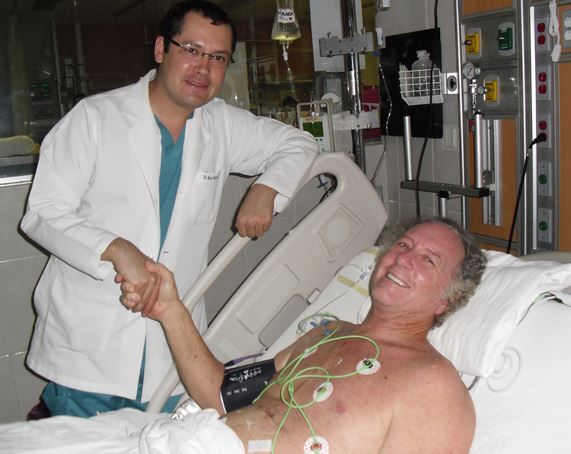
But thank goodness that practicing medicine is more nuanced than the Facebook stream of hostility that we are subjected to on a daily basis. If patients spoke to me the way online comments read, I’d surely have quit medicine years ago. But my reality is that patients are generally grateful, attentive, and respectful. This could be because I work in inpatient rehabilitation medicine, a place where patients are screened for motivation to participate in their care, but I don’t think that’s the whole story. I have experience working in other settings across the country (including Emergency Departments), and I have found a significant number of good-natured, engaged patients there too.
I think that to some degree our attitudes shape our work environments. Patient and peer dispositions are in part a reflection of our own. Try approaching a frightened, sick patient with an arrogant, dismissive tone and see how your professional relationship with them (and their families) develops. There is a negative cascade that physicians can trigger (perhaps unwittingly) when they are rushed, curt, or inattentive. Beginning every new patient relationship with a caring, respectful, detailed history and physical exam lays a foundation of trust for future interactions. Once you have established that positive rapport, the daily grind (along with what my friend, Dr. Steve Simmons, has nicknamed ‘C.R.A.P.P.’ – Continuous Restrictive And Punitive Paperwork) is much more bearable.
As physicians we have the power to make our careers as meaningful or soul-sucking as we choose. Reducing the C.R.A.P.P. in our work lives can help (I’ve tried outpatient, “concierge style” practices and inpatient locum tenens assignments with good success), but that’s not the most important factor in enhancing work satisfaction. The relationships built by allying ourselves with patients, and shepherding them through this broken system, are where the rewards lie. They hold the keys to our professional fulfillment because nothing can beat the joy of helping those in need.
How do I know that patient appreciation is enough to make medicine worthwhile?
Because I still don’t hate being a doctor.
November 9th, 2012 by Dr. Val Jones in Health Policy, Humor, Opinion
4 Comments »
 If you live in a small town or rural area of the United States, you may have noticed that family doctors are becoming an endangered species. Private and public health insurance reimbursement rates are so low that survival as a solo practitioner (without the economies of scale of a large group practice or hospital system) is next to impossible. Some primary care physicians are staying afloat by refusing to accept insurance – this allows them the freedom to practice medicine that is in the patient’s best interest, rather than tied to reimbursement requirements.
I joined such a practice a few years ago. We make house calls, answer our own phones, solve at least a third of our patients’ problems via phone (we don’t have to make our patients come into the office so that we can bill their insurer for the work we do), and have low overhead because we don’t need to hire a coding and billing team to get our invoices paid. Our patients love the convenience of same day office visits, electronic prescription refills, and us coming to their house or place of business as needed.
Using health insurance to pay for primary care is like buying car insurance for your windshield wipers. The bureaucracy involved raises costs to a ridiculously unreasonable level. I wish that more Americans would decide to pay cash for primary care and buy a high deductible health plan to cover catastrophic events. But until they do, economic pressures will force primary care physicians into hospital systems and large group practices. My friend and fellow blogger Dr. Doug Farrago likens this process to being “assimilated by the Borg.”
Doug offered a challenge to his readers – to customize the definition of Star Trek’s Borg species to today’s healthcare players. I gave it my best shot. Do you have a better version?
Who are the Borg:
The Borg are a collection of alien species that have turned into cybernetic organisms functioning as drones of the collective or the hive. A pseudo-race, dwelling in the Star Trek universe, the Borg take other species by force into the collective and connect them to “the hive mind”; the act is called assimilation and entails violence, abductions, and injections of cybernetic implants. The Borg’s ultimate goal is “achieving perfection”.
My attempt to customize the definition:
Hospitalists are a collection of primary care physicians that have turned into cybernetic organisms functioning as drones of the collective or hive. Hive collective administrators (HCAs), in association with partnered alien species drawn from the insurance industry and government, take other primary care physicians by economic force and connect them to “the hive mind”; the act is called assimilation and entails crippling reimbursement cuts, massive increases in documentation requirements, oppressive professional liability insurance rates, punitive bureaucratic legislation, and threat of imprisonment for failure to adhere to laws that HCA- partnered species interpret however they wish. The HCAs’ ultimate goal is “achieving perfect dependency” first for the drones, then for their patients, so that HCAs and their alien partners will become all powerful – dictating how neighboring species live, breathe, and conduct their affairs. Resistance is futile.
***
To learn more about my insurance-free medical practice, please click here. We can unplug you from the Borg ship!
August 2nd, 2011 by Toni Brayer, M.D. in Health Policy, Opinion
No Comments »

Close your eyes and think of a doctor. Do you see a Marcus Welby type? A middle-aged, smiling and friendly gentleman who makes house calls? Is his cozy office staffed by a long time nurse and receptionist who knows you well and handles everything for you? If that is what you envision, either you haven’t been to the doctor lately or you are in a concierge practice where you pay a large upfront fee for this type of practice. Whether you live in a big city or a rural community, small practices are dissolving as fast as Alka Selzer. Hospitals and health systems are recruiting the physicians, buying their assets (unfortunately not worth much) and running the offices.
Doctors are leaving small practices and going into the protection of larger groups and corporations because of economic changes that have made it harder and harder for small practices to survive. The need for computer systems, increasing regulations, insurance consolidation, skyrocketing overhead and salaries coupled with low reimbursement has signaled the extinction of the Marcus Welby practice. Some older doctors are finishing out their years and will shutter their offices when they retire. Young to middle age physicians are selling out to large groups and new physicians would never even consider this type of practice. They are looking for an employed model from the outset.
Every doctor I know who is currently in private practice is Read more »
*This blog post was originally published at ACP Internist*
March 19th, 2011 by BobDoherty in Health Policy, Opinion
No Comments »

A few days ago I received an email from a general internist about my posts about concierge practices. I have known this physician for over 20 years, and he has great insight into the challenges facing health care. This email was no exception; he had this to say how his group took the “middle way” of pursuing private funding for the Patient-Centered Medical Home (PCMH):
“My practice includes 3 primary care physicians and has invested heavily in IT infrastructure. We have re-engineered our workflows and have achieved benchmark levels of quality and service. We have won NCQA certification for our PCMH. Yet so far no payer has stepped up to underwrite our investment. So we have joined Privia Health in forming a ‘membership practice.’ Patients are asked to pay a small monthly membership fee. In return they receive some special attention . . . Plan sponsors and payers are invited to pay the fee on behalf of their employees. . . Patients like having same day access. They like secure email communication with their doctor. They like having a personal health record. They like having a case manager helping them navigate the system. And they like going online in the evening to make their own appointments. ACP policy supports the medical home but is silent on the question of what a medical home is to do before local payment realities catch up. I owe my patients my efforts to assure that when I retire an eager young internist will welcome the opportunity to take over my practice. Absent public or private funding for the medical home that is just not going to happen.” Read more »
*This blog post was originally published at The ACP Advocate Blog by Bob Doherty*