More and more patients these days are seeing their physician pull out an iPhone or iPad to look up drug dosing information, review lab and radiology data, or help teach them more about their medical condition. And as developers, and the increasing number of physician-developers, continue to find more creative ways to bring medical resources to the point of care, we can certainly expect smartphone platforms and medical apps to become pervasive at the bedside. However, just as healthcare providers and patients are noticing this trend, there are number of others who are paying attention as well – for WebMD, one of the largest companies in this industry, it is the lawyers who may be watching that are worrisome.
As they put it in their annual statement to the SEC,
If our content, or content we obtain from third parties, contains inaccuracies, it is possible that consumers, employees, health plan members or others may sue us for various causes of action.
We’ve talked in the past about potential liability issues for healthcare providers using medical apps and the developers who produce them, as well as similar issues related to electronic health records. The fact that WebMD found the issue significant enough to report it to the SEC and their investors clearly indicates the issue is still unresolved and the remainder of their statement adds some further interesting perspective. Read more »
*This blog post was originally published at iMedicalApps*
A German physician wrote me about this, so while CNN may have an international reach, it’s not always with an adoring audience.
The physician was reacting to the weekend “Paging Dr. Gupta” program, which Dr. Gupta referred to once as “SG, MD.” The first thing that struck me was his introduction, in which he said:
“I’m your doctor. I’m also your coach.”
Later in the program he said:
“Think of this as your appointment. No waiting. No insurance necessary.”
I find this very troubling. He’s not my doctor. He’s not my coach. When I watch a “news” program, it’s NOT my medical appointment. It’s supposed to be news, not medical advice.
But that’s not what the German physician wrote to me about, so I kept watching (the segment in question appears about 5 minutes and 30 seconds deep, and after the 30-second commercial you have to watch to get there):
Gupta reacted to a viewer’s message on Twitter in which the tweep asked: “Does anyone know a ‘miracle’ treatment for ovarian cancer?” Read more »
Diabetes is very expensive to manage and to treat the complications of, but what comes at an even higher cost is the damage of statements from a doctor, claiming that diabetes is reversible. I was diagnosed as a child, and my type 1 diabetes is not the result of any controllable factors. However, I have many friends who have type 2 diabetes who can make the same claim.
I can’t lie – I had a lot of hope about your episode regarding diabetes. Even though it was billed as “the silent killer” and even though I knew you’d show the darkest side of diabetes-related complications possible to “sensationalize” this disease, I was holding out because I wanted this episode to be accurate. Read more »
*This blog post was originally published at Six Until Me.*
So my cousin emailed me the other night. She had a breast cancer recurrence about 6 years ago. Before you feel too sorry for her, however, know this: She’s doing great, moving from one targeted treatment/chemotherapy/laser knife procedure to another. Her doctors are fabulous. Her attitude is amazing. And, as she constantly tells us, she feels great and is loving life. No, this isn’t about her. It’s about her friend, the one she emailed me about.
Her friend was diagnosed with an early stage of an aggressive form of non-small cell lung cancer a year ago. After chemotherapy, a CT scan this summer showed her lungs clear of cancer; but a followup CT scan last week showed some spots. This woman had participated in a clinical trial during her first round of treatment and her doctor wanted her to join another clinical trial. But my cousin’s friend is freaked out; she doesn’t want to feel like a “guinea pig.” So when her daughter suggested she see a doctor who specializes in an unproven and experimental therapy called insulin potentiation therapy, she was ready to call for an appointment. Read more »
So that’s where I came up with this thought: it would be great if some folks who talked science-based sense became celebrities so they’d at least have the same platform to counter people like Jenny McCarthy. On his comment thread, I suggested that we can only hope that Orac someday gets a movie deal and acquires the public celebrity that some of these jokers have. Read more »
*This blog post was originally published at Terra Sigillata*
Latest Tweets from @DrVal
Could not authenticate you.
Better Health Audio
Featured Audio
Healthy VisionTM with Dr. Val: Safe Contact Lens Wear and Care
It’s no secret that doctors are disappointed with the way that the U.S. healthcare system is evolving. Most feel helpless about improving their work conditions or solving technical problems in patient care. Fortunately one young medical student was undeterred by the mountain of disappointment carried by his senior clinician mentors…
I am proud to be a part of the American Resident Project an initiative that promotes the writing of medical students residents and new physicians as they explore ideas for transforming American health care delivery. I recently had the opportunity to interview three of the writing fellows about how to…
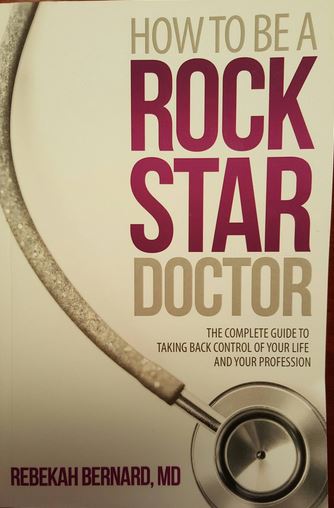
I m often asked to do book reviews on my blog and I rarely agree to them. This is because it takes me a long time to read a book and then if I don t enjoy it I figure the author would rather me remain silent than publish my…
When I was in medical school I read Samuel Shem s House Of God as a right of passage. At the time I found it to be a cynical yet eerily accurate portrayal of the underbelly of academic medicine. I gained comfort from its gallows humor and it made me…
I am hesitant to review diet books because they are so often a tangled mess of fact and fiction. Teasing out their truth from falsehood is about as exhausting as delousing a long-haired elementary school student. However after being approached by the authors’ PR agency with the promise of a…



 More and more patients these days are seeing their physician pull out an iPhone or iPad to look up drug dosing information, review lab and radiology data, or help teach them more about their medical condition. And as developers, and the increasing number of physician-developers, continue to find more creative ways to bring medical resources to the point of care, we can certainly expect smartphone platforms and medical apps to become pervasive at the bedside. However, just as healthcare providers and patients are noticing this trend, there are number of others who are paying attention as well – for WebMD, one of the largest companies in this industry, it is the lawyers who may be watching that are worrisome.

 Dear Oprah and Dr. Oz,