November 3rd, 2010 by BarbaraFicarraRN in Better Health Network, Health Policy, Opinion, True Stories
Tags: Barbara Ficarra, Cardiology, Care Coordination, Cost of Medical Care, Dr. Stephen Schimpff, Health In 30, Misusing Medical Technology, Primary Care Physicians, Quality Patient Care
No Comments »

Guest post by Stephen C. Schimpff, M.D.
We are often told that the reason for the high cost of medical care is all of our new technologies and drugs. There is an element of truth in that but when used correctly, new technologies save lives and improve the quality of patient care and often improve safety. But technologies used inappropriately increase costs while not improving quality and may adversely impact safety.
A patient example
An older woman had been coming to the same primary care physician (PCP) as her daughter for over twenty years. She lived in another city about 30 miles distant but she preferred to visit the doctor with her daughter. She also occasionally saw a doctor near her home if she had an immediate problem.
On nearly every visit she said that she felt “tired.” Repeated history and exam over twenty years revealed no cause nor did logical tests such as those for anemia or hypothyroidism. She then developed syncopal episodes — times when she would black out and fall to the floor, once bruising her head when she fell against the stove, and then waking up in a few minutes. Evaluation by the PCP showed that she had intermittent episodes of bradycardia, or very slow heart rate, resulting in the drop attacks. Read more »
*This blog post was originally published at Health in 30*
November 3rd, 2010 by AndrewSchorr in Better Health Network, Health Tips, News, Opinion, Research, True Stories
Tags: Advanced Breast Cancer, Andrew Schorr, Cancer, Clinical Research, Clinical Trials, ClinicalTrials.gov, Considering a Clinical Trial, Corengi.com, Empowering Patients, Encouraging Clinical Trial Enrollment, Human Clinical Trials, Human Subject Research, Leukemia and Lymphoma Society, Oncology, Participating in Medical Research, Patient Power, Ryan Luce, Type 2 Diabetes
No Comments »

About 10 days ago I appeared in Phoenix as a speaker at a regional education seminar put on by the Leukemia and Lymphoma Society. My topic was sharing my experience as a participant in a clinical trial. I was delighted to do so, as I feel that trial saved my life and restored me to good health.
I am hoping my words encouraged others to consider being in a trial. There are no guarantees of the result, but trials are always worth considering. Unfortunately, few patients do. That may limit their choices and certainly holds back research that could help others. What a shame.
Clinical trials are defined as human subject research. It is through these trials that we determine if new drugs or devices can better serve patients than what is currently available. Clinical trials are available for almost every disease — although finding these trials can be challenging. Read more »
*This blog post was originally published at Andrew's Blog*
November 2nd, 2010 by admin in Health Policy, Humor, Opinion, True Stories
Tags: Canada, Care Tips From A Patient, Carolyn Thomas, Comparative Clinical Effectiveness Research, Consideration for the Patient, Direct Patient Care, Exam Room Etiquette, General Medicine, Guest Post, Healthcare Professionals, Heart Sisters, Hospital Staff, How To Treat Patients, Improving Patient Care, Medical Staff Behavior, Medicine and Humanism, Patient Care Etiquette, Professional Roles in Patient Care, Professionalism In Healthcare, Quality Patient Care, Respectful Patient Care, Successful Patient Care, The Ethical Nag
No Comments »
This is a guest post from Carolyn Thomas:
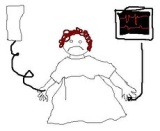 An Open Letter To All Hospital Staff
Dear hospital employees,
After a particularly bizarre experience undergoing a treadmill stress echocardiogram at your hospital recently, I decided to do something that I have never done before: I called the manager of the cardiology department to complain about her staff. (Incidentally, a recent opinion survey of international tourists found that Canadians were #1 in only one category: “Least likely to complain when things go wrong” — so you can appreciate that lodging an official complaint is a fairly big deal here!)
In my best PR fashion, I told the manager how distressing the appointment had been because of the behaviour of the two cardiac technicians in the room. It’s not so much that they were openly rude, but it was their insufferable lack of people skills that had pushed me over the edge. No introductions, no eye contact, no consideration of how awkward this test can be, no explanation of the test procedures or even the flimsiest effort at polite conversation. To them, I was merely the 1:00 o’clock appointment, the obstacle between them and their next coffee break, just a piece of meat on a slab — but worse, an invisible piece of meat. Read more »
October 30th, 2010 by Lucy Hornstein, M.D. in Better Health Network, Health Tips, Opinion, Research, True Stories
Tags: Biological Aging, Dr. Lucy Hornstein, Getting Older, Good Sleep Habits, Healthy Aging, Medical Residency, Medical Residents, Medical School, Musings of a Dinosaur, puberty, Signs of Aging, Teen Health, Young Adults
No Comments »

I heard a 23-year-old woman complain: “I must be getting old when 11:00 at night is late.” It got me thinking.
It turns out that the explanation for why teens are natural night owls has recently been elucidated. They can’t help it — they just don’t get tired until way later in the evening. Then, of course, their bodies want to stay asleep well into the next morning in order to feel sufficiently rested. Since most of them are stuck with the artificial structure of school hours, they’re screwed — and condemned to suffer constant fatigue from cumulative sleep deprivation. Old news.
Then I started wondering about the back end of this phenomenon. Even though our American “youth culture” attributes great coolness to late-night happenings, since this pubertal sleep shift is biological, there must come a point at which their pineal glands go back to releasing melatonin at a more reasonable hour. Does 10 years sound about right? I remember not being nearly as enamored of the “all-nighter” by the time medical school rolled around, as opposed to college, where staying up all night was a regular occurrence. Certainly by residency (ages 26 to 30), it was a killer. Read more »
*This blog post was originally published at Musings of a Dinosaur*
October 28th, 2010 by DrRob in Better Health Network, Opinion, True Stories
Tags: Being a Primary Care Doctor, Big Picture Benefit of Primary Care, Caring for the Whole Family, Dr. Rob Lamberts, Family Doctor, Family Medicine, General Medicine, Internal Medicine, Life's Lessons, Long-Term Relationship, Musings of a Distractible Mind, Patient-Doctor Relationship, PCP, Personal Relationships, Physician Value, Primary Care Physician
No Comments »

Her eyes were bloodshot. She responded to my casual greeting of “How are you?” with a sigh. “How am I? I’m alive, I can tell you that much for sure.” She went on to describe a situation with her adult son who’s in a bad marriage and has struggled with addiction. She sighed again: “I feel weak. I don’t know if I can deal with this one. I’ve had so many hard things in my life already. When will it stop?”
“Many hard things” — yes, I agree with that assessment. She’s been my patient for more than a decade, and I’ve had a front row seat to her life. Her husband died a few years ago (while in his 40′s) of a longstanding chronic disease. Her daughter also has this disease, and has been slowly declining over time. I’ve watched her bear that burden, and have actually shared some in that load, being the doctor for the whole family.
I’ve also taken care of her parents, who had their own psychological problems. They were difficult patients for me to manage, and they had died long enough ago that I had forgotten that difficult chapter of her life. I’ve helped her with her emotional struggle from all of this. It was hard, but she hung on as best as she could. I know. I was there when it was happening.
To me, this is the biggest benefit of primary care. Yes, it’s nice to have a doctor who knows what’s going on with all of your other doctors. It’s good to have a doctor you are comfortable talking with about anything. It’s good to have someone without a financial stake in doing surgery, performing procedures, or ordering tests. But the unique benefit a long-term relationship with a primary care physician (PCP) is the amazing big picture view they have. Read more »
*This blog post was originally published at Musings of a Distractible Mind*