October 16th, 2010 by Dr. Val Jones in Opinion, True Stories
Tags: Attitude, Call Center, CNN, Dr. Val Jones, Elizabeth Cohen, Empowered Patient, Healthcare Staff, Healthcare Workers, Human Compassion, Psychology, Snark
2 Comments »
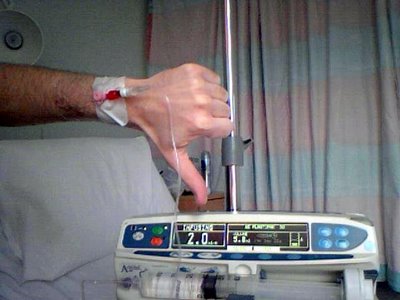 Every once in awhile I have the distinct “pleasure” of being a patient. This week I was reminded about how awful it is. I didn’t mind the blood draws, poking and prodding, injections, or interaction with my physician, but it was the rudeness of the ancillary and administrative staff that really got under my skin. I had forgotten how unfriendly people can be, and how especially hard it is to deal with when you’re not feeling well. Context is everything when it comes to rolling your eyes and sighing heavily. Let me explain.
Read more »
October 15th, 2010 by Happy Hospitalist in Better Health Network, Health Policy, Opinion, True Stories
Tags: Barrier To Patient Care, Cardiologist, Childhood Illness, Children's Health, Doctor-to-Doctor Communication, Doctors' Decisions, Doctors' Experience, Fear of Medical Malpractice, Happy Hospitalist, Healthcare Bureaucracy, Healthcare Politics, Heterotaxy Syndrome, ICU, Intensive Care, Lack of Communication, Medical Licensure, Pediatrics, Team-Based Patient Care
No Comments »

I read this article about a young child with heterotaxy syndrome with great interest. Not because I find heterotaxy syndrome something of great fascination, but because of the lack of communication — on both ends of the spectrum:
Even though 5 other Dr. all came in and listened to his lungs and said that he didn’t sound like he was wheezing and that his lungs sounded really good. But because this hospital is overly political, process driven, bureaucratic, and in a constant state of litigious fear they are unable to make any conclusions based on actual medicine and patient care. Common sense is blown out the window when you have a system were a hospitalist one year out of medical school has an opinion that is as valuable as a cardiologist with 25+ years experience.
But in fairness, they all had to “really consider her opinion.”
So they went and got a pulmonologist to evaluate him, which Scott and I were very happy about because there was nothing in the world that would’ve made me more happy in that moment than to have her proven wrong. Which she was.
The whole article is a case study in stress, distrust, and legalism. Read more »
*This blog post was originally published at The Happy Hospitalist*
October 13th, 2010 by SteveSimmonsMD in Better Health Network, Opinion, Primary Care Wednesdays, True Stories
Tags: DocTalker Family Medicine, Dr. Jerome Groopman, Dr. Steve Simmons, Dr. William Osler, General Medicine, Internal Medicine, Participatory Medicine, Patient-Doctor Relationship, Patients As Partners, Primary Care
No Comments »
The famous late 19th and early 20th century physician, Sir William Osler, said that “a physician who treats himself has a fool for a patient.” How would he have felt about patients diagnosing and treating themselves? Would he have written in support of the Journal of Participatory Medicine or against it? I also wonder how he would have practiced medicine in the “information age” when many of our patients present with a diagnosis already made, right or wrong.
I recognize that bringing Dr. Osler into a discussion set in the information age is, perhaps, anachronistic. Yet I believe he still has something to teach the 21st century on the topic of patient participation. When he advised that “the first duty of the physician is to educate the masses not to take medicine,” he offered one of the earliest lessons on a physician’s role as educator.
He also said: “The great physician would treat the patient with the disease while the good physician would treat the disease.” For me, this marches lock-step with the reality of today’s patient as consumer and active participant in the doctor-patient relationship. Simply put, it is impossible to separate the patient from a pre-conceived and often well-researched opinion — correct or not. So to treat the “patient with the disease” requires me to think of my patient as an intellectual partner. Read more »
October 12th, 2010 by Jennifer Shine Dyer, M.D. in Better Health Network, Health Policy, Opinion, True Stories
Tags: Dr. Jennifer Shine Dyer, Healthcare Costs, Healthcare Payment Responsibility, Healthcare reform, Hyperglycemia, Insulin Regimen, medicaid, Overtreatment, Pediatric Endocrinology, Socioeconomics, Type 1 Diabetes, Unnecessary Hospitalization, Unnecessary Medical Care
No Comments »
A common question that I get as a practicing physician with a public health background is: “Why is healthcare reform so complicated?” I feel that the question of who’s responsible for healthcare payment is not always an easy one to answer. An example from my most recent weekend on call covering an academic pediatric endocrinology practice demonstrates this point:
“Bill” is a 16-year-old African American male on state Medicaid insurance with type 1 diabetes since the age of 10. He is followed regularly every three months by another colleague in the endocrinology clinic. Review of his last several clinic notes on the electronic medical record reveal that he has been in moderate control of his diabetes on NPH/Novolog twice-daily insulin regimen. Approximately one year prior he was changed to this insulin regimen due to concerns with missed insulin shots on another insulin regimen that provided superior control but which required four shots of insulin daily rather than the two shots daily on his current regimen. Read more »
October 10th, 2010 by Shantanu Nundy, M.D. in Better Health Network, Health Policy, Opinion, True Stories
Tags: Basic Health Education, BeyondApples.org, Chronic Disease, Dr. Shantanu Nundy, Failure To Educate Patients, Failure to Individualize Care, Forgetting To Counsel Patients, General Medicine, Internal Medicine, Patient Education, Patient-Centered Care, Personalized Healthcare, Personalized Medicine, Primary Care, Tailored Health Education, The Imperative Of Patient Safety
No Comments »

The past two weeks I’ve been the “dayfloat” resident on the cardiology inpatient service. With the 30-hour-shift work “restrictions” placed on medical residents, there has been a need for new systems of care to ensure the safety of newly admitted patients and cardiology dayfloat is one of them. My job is to round with the post-call team, help them get out of the hospital on time, and then take care of their patients through the end of the work day. It’s a fairly easy rotation, as they go, though because I “float” from one team to another without patients of my own, it’s also not the most satisfying.
Towards the end of my two week rotation, I was paged by a nurse because a patient’s husband wanted an update on his wife’s condition. Glancing at my “signout” — a one-page synopsis of the patient’s presenting illness and hospital course — I learned that Mrs. FN (as I will call her) was admitted to the hospital for heart failure secondary to “medical noncompliance.” It appeared that she had not had any of her medications for well over a week, which likely precipitated the shortness of breath and fluid overload that led to her admission. On top of this, the patient had a number of “dietary indiscretions” including eating Chinese food, which likely only exacerbated her condition. Read more »
*This blog post was originally published at BeyondApples.Org*