When it comes to the social media landscape, doctors are scarce. Few on Twitter and fewer with blogs. Maybe we’re socially lazy. Or maybe we’re just taking it all in.
Mitch Joel of Six Pixels of Separation caught my eye last week with his article “In Praise of Lazy” and reminded me that despite the how we may want to see things, most of us aren’t interested in creating content. In fact, he describes a 1 percent rule — only 1 percent of the audience will take time to actually create content.
I suspect that if we were to take the time and do the survey properly, we would find that physicians too are largely new media consumers — or spectators, joiners or collectors in the Forrester sense of the word. Physicians, in fact, might adhere to something of a 0.1 percent rule. Like Peter Sellers as “Chance the Gardner” in the 1979 classic, Being There, we “like to watch.” Read more »
*This blog post was originally published at 33 Charts*
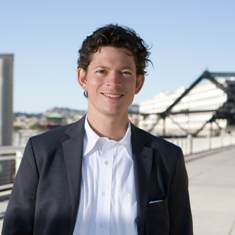
Thomas writes about science, health, and medicine and believes that engaging people in their health and involving them as participants and decision makers leads to improving their behavior and their health outcomes. He knows there’s a technology emergence of cheaper, better tools that have the ability to offer people a way “in” — from self-tracking gadgets to online disease communities and beyond. Thomas is intrigued by the confluence of ideas and technology that make it an opportune time in healthcare.
The Decision Tree is based on the premise that our health doesn’t happen all at once, but that it’s a consequence of years of choices — some large, some small, some wise, some poor. A decision tree, therefore, is a “device” that can help make it more obvious that these decisions are something we are actually choosing — a way to externalize the choices that we otherwise make without much thought.
Maria: As executive editor of Wired Magazine, what brought you to write a book about consumer health?
Thomas: I come from a family of healthcare providers — my father is a doctor, my mother is a nurse — so it’s always been a topic area I’ve been comfortable with. A few years ago I felt that I had more to add, and wanted to get more specific in my training, so I got my masters in public health at UC Berkeley. That led me to recognize all sorts of commonalities between the worlds of information technology and public health. At the same time, technologists in Silicon Valley and elsewhere have recognized that healthcare is one of the last industries untouched, in many senses, by the IT revolution. It’s happening now, very quickly, and I wanted to be among the first to not only cover the business, but to cover the way these companies and services will change and improve our lives. Read more »
Appearing as a Second Life 3D virtual-world avatar at Mayo Clinic’s “Transform 2010” symposium (watch the video here), Mrs. Q — a teacher and the anonymous author of the blog “Fed Up With Lunch: The School Lunch Project” — told the story of how her unique health mission has come to be. She’s determined to help people understand just how sick our “healthy” school lunches really are.
Mrs. Q has sparked the interest of child health advocates around the country. Thanks to programs like First Lady Michelle Obama’s “Let’s Move Initiative” and Jamie Oliver’s “Food Revolution,” the nation is paying more attention to childhood obesity and school lunch reform.
Mrs. Q’s blog was started because of her own experiences with school meals after she ate the food prepared at school because she forgot her lunch at home. She keeps her identity a secret due to fear of losing her teaching job. Read more »
I have a friend who had a blocked cardiac artery. A couple of years ago he had angioplasty on it, and his doctor inserted stents. The stents got rid of his chest pain and other symptoms, but didn’t do anything to get at the underlying cause of the blockage, which had to do with an unhappy combination of genetics and a –- perfectly admirable –- taste for rich, fatty foods. Like steak. (More on that in a moment.)
Before having the procedure, his doctors spent a lot of time with him explaining what the surgery would and wouldn’t do. In particular, the doctors explained that the stents would do their job, but he had to do his. He needed to eat better, exercise more, and take his medications. He’s followed most of that advice, and is doing well.
Unfortunately, his experience is not typical. A recently published study found that more than 80 percent of patients who had gotten angioplasty and stents thought they were alone a cure for their problems.
These patients are wrong. So how can it be that they are coming to this strange conclusion? According to some, it’s the doctors’ fault. Read more »
*This blog post was originally published at See First Blog*
It’s no secret that doctors are disappointed with the way that the U.S. healthcare system is evolving. Most feel helpless about improving their work conditions or solving technical problems in patient care. Fortunately one young medical student was undeterred by the mountain of disappointment carried by his senior clinician mentors…
I am proud to be a part of the American Resident Project an initiative that promotes the writing of medical students residents and new physicians as they explore ideas for transforming American health care delivery. I recently had the opportunity to interview three of the writing fellows about how to…
I m often asked to do book reviews on my blog and I rarely agree to them. This is because it takes me a long time to read a book and then if I don t enjoy it I figure the author would rather me remain silent than publish my…
When I was in medical school I read Samuel Shem s House Of God as a right of passage. At the time I found it to be a cynical yet eerily accurate portrayal of the underbelly of academic medicine. I gained comfort from its gallows humor and it made me…
I am hesitant to review diet books because they are so often a tangled mess of fact and fiction. Teasing out their truth from falsehood is about as exhausting as delousing a long-haired elementary school student. However after being approached by the authors’ PR agency with the promise of a…




 As an invited media guest at Mayo Clinic’s
 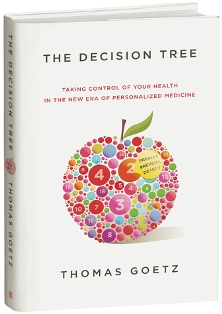 The Decision Tree is based on the premise that our health doesn’t happen all at once, but that it’s a consequence of years of choices — some large, some small, some wise, some poor. A decision tree, therefore, is a “device” that can help make it more obvious that these decisions are something we are actually choosing — a way to externalize the choices that we otherwise make without much thought.
  Appearing as a