March 15th, 2011 by Maria Gifford in Announcements, Medblogger Shout Outs
No Comments »
 Grand Rounds will be hosted right here at “home” at Better Health on Tuesday, March 22th, 2011.
Please send your blog-post submissions via e-mail by 12:00AM midnight CT on Saturday, March 19th, to: maria.gifford@getbetterhealth.com.
Please include:
- “Submission for Grand Rounds” in the subject line of your e-mail.
- Your name (blog author), the name of your blog, and the URL of your specific blog-post submission.
- A short summary (1 to 3 sentences) of your blog post.
There’s no specific theme for this edition of Grand Rounds — just send us something really smart or deep or profound that will move us and make us all think harder about health and medicine.
For more information, please see the Grand Rounds Submissions Guidelines. We look forward to receiving your submissions and featuring them here next week. Thank you!
– Maria Gifford, Director of Content, Better Health
October 7th, 2010 by Maria Gifford in Announcements, Better Health Network, Medblogger Shout Outs, News
3 Comments »
 Check out this preview article (dated October 20, 2010) by Madonna Behen on Oprah’s “O” Magazine website entitled “4 Doctor’s Blogs to Read Now,” where two of the four doctors’ blogs listed are regular Better Health content contributors. They are family physician Lucy Hornstein, M.D., author of “Musings of a Dinosaur,” and internist, cardiologist, and cardiac electrophysiologist Wesby Fisher, M.D., author of “Dr. Wes.”
An excerpt:
You thought physicians were robotic and cold? A new epidemic of personal blogs written by docs might change your mind. These medical scribes are boldly posting their real feelings (and worst fears) on the web, for all the world to see. Their journals provide us patients with an informative and humanizing look behind the professional mask.
Congratulations to these great physician bloggers of ours for making up half of the list!
September 19th, 2010 by Maria Gifford in Better Health Network, Expert Interviews, Health Tips, Research
No Comments »
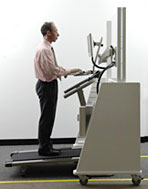 Obesity doesn’t stand a chance against Dr. Jim Levine, one of the prestigious presenters at Mayo Clinic’s Transform 2010 conference last week. Dr. Levine’s fascinating research focuses on helping people understand obesity, weight reduction, and Non-Exercise Activity Thermogenesis (NEAT) — the idea that expending calories through the activities of daily living is more important for calorie burning than exercise is.
Dr. Levine’s “Treadmill Desk” has won more than 50 national and international awards in science, including the Judson Daland prize from the American Philosophical Society, the Invention of the Future Award from NASA, and the Innovation Award at the World Fair. The “Walkstation” is now a product of Steelcase.
Dr. Levine’s work has been highlighted nationally around the world, and he has produced documentary films with the BBC, ABC, and CNN. His Walkstation has been featured in The New York Times, his vision of a future where office people walk at work in USA Today, and his Treadmill Desk tested live on Good Morning America. Read more »
September 16th, 2010 by Maria Gifford in Better Health Network, Health Tips, Interviews, News, True Stories
No Comments »
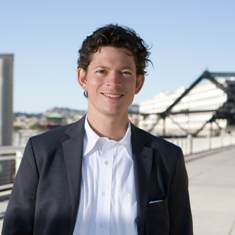 As an invited media guest at Mayo Clinic’s Transform 2010 symposium earlier this week, I had the pleasure of interviewing presenter Thomas Goetz, Executive Editor of Wired Magazine and author of the new book, The Decision Tree: Taking Control of Your Health in the New Era of Personalized Medicine.
Thomas writes about science, health, and medicine and believes that engaging people in their health and involving them as participants and decision makers leads to improving their behavior and their health outcomes. He knows there’s a technology emergence of cheaper, better tools that have the ability to offer people a way “in” — from self-tracking gadgets to online disease communities and beyond. Thomas is intrigued by the confluence of ideas and technology that make it an opportune time in healthcare.
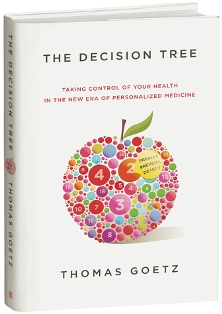 The Decision Tree is based on the premise that our health doesn’t happen all at once, but that it’s a consequence of years of choices — some large, some small, some wise, some poor. A decision tree, therefore, is a “device” that can help make it more obvious that these decisions are something we are actually choosing — a way to externalize the choices that we otherwise make without much thought.
Maria: As executive editor of Wired Magazine, what brought you to write a book about consumer health?
Thomas: I come from a family of healthcare providers — my father is a doctor, my mother is a nurse — so it’s always been a topic area I’ve been comfortable with. A few years ago I felt that I had more to add, and wanted to get more specific in my training, so I got my masters in public health at UC Berkeley. That led me to recognize all sorts of commonalities between the worlds of information technology and public health. At the same time, technologists in Silicon Valley and elsewhere have recognized that healthcare is one of the last industries untouched, in many senses, by the IT revolution. It’s happening now, very quickly, and I wanted to be among the first to not only cover the business, but to cover the way these companies and services will change and improve our lives. Read more »












